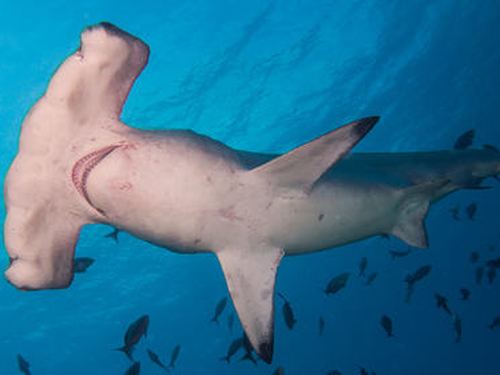
Tiburón martillo comúnScalloped hammerhead
Scalloped hammerheadTiburón martillo común
Sphyrna lewini
Sphyrnidae · TiburonesSharks
Su cabeza ancha le da una visión muy amplia y le ayuda a detectar presas enterradas.
Its wide head gives it a very wide field of view and helps it detect buried prey.
Cómo reconocerloHow to recognise it
Cabeza en forma de martillo con el borde frontal ondulado y una muesca en el centro.
Hammer-shaped head with a wavy front edge and a notch in the middle.
Fíjate enLook for: Borde de la cabeza onduladoWavy head edge
Se confunde conOften confused with
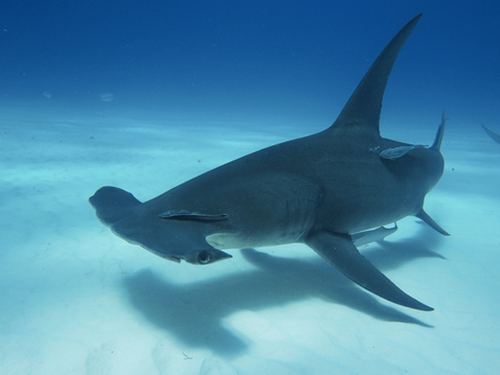
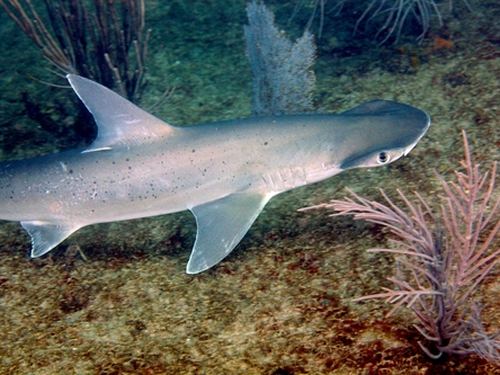
Cómo viveHow it lives
Forma grandes cardúmenes en montes submarinos; las crías usan bahías costeras. En peligro crítico.
Forms large schools around seamounts; pups use coastal bays. Critically endangered.
De dónde viene el nombreWhere the name comes from
Sphyrna. "Martillo" en griego.Greek for "hammer".
FichaData sheet
- Tamaño máximoMaximum size
- 3,7 m (longitud total)3.7 m (total length)
- AlimentaciónDiet
- Come pecesEats fish
- ActividadActivity
- De día y de nocheDay and night
- Dónde viveHabitat
- Aguas abiertasOpen water
- En esta costaOn this coast
- Muy raraVery rare
- Estado globalGlobal status
- CR En peligro críticoCritically endangered (Lista Roja UICN)(IUCN Red List)
- RegistroRecord
- Registrado en la región (Limón a Bocas del Toro)Recorded in the region (Limón to Bocas del Toro)
Registros en esta costaRecords on this coast
observaciones verificadas en iNaturalist entre Cahuita y Punta Mona. Puesto 237 de 315.
verified iNaturalist observations between Cahuita and Punta Mona. Rank 237 of 315.
Mide cuánto se fotografía, no cuántos hay: lo grande, colorido y somero se registra más.
This measures how often it is photographed, not how many there are: big, colourful, shallow things get recorded more.
FuentesSources
- iNaturalist (región). Observaciones entre Limón (CR) y Bocas del Toro (Panamá), consulta nov. 2026. AbrirOpen