Poco antes de las cuatro de la tardeJust before four in the afternoon
El terremoto de Limón, de magnitud 7,7, sacudió el Caribe de Costa Rica y el noroeste de Panamá. Cuando paró, la línea de costa ya no estaba donde antes: unos 100 km de litoral se habían levantado.
The Limón earthquake, magnitude 7.7, shook the Caribbean side of Costa Rica and north-western Panama. When it stopped, the shoreline was no longer where it had been: about 100 km of coast had risen.
Cuánto subióHow far it rose
El cambio fue mayor cerca de la ciudad de Limón y disminuyó hacia el sureste. La costa se movió en bloques, separados por fallas. Mueve el control para ver qué le pasa a un arrecife somero cuando el suelo sube y el mar se queda donde estaba.
The change was greatest near the city of Limón and decreased towards the south-east. The coast moved in blocks separated by faults. Move the slider to see what happens to a shallow reef when the ground rises and the sea stays where it was.
Esquema, no a escala. El levantamiento medido fue de 0,3 a 1,85 m según el lugar.Diagram, not to scale. Measured uplift was 0.3 to 1.85 m depending on the place.
Lo que quedó en secoWhat was left dry
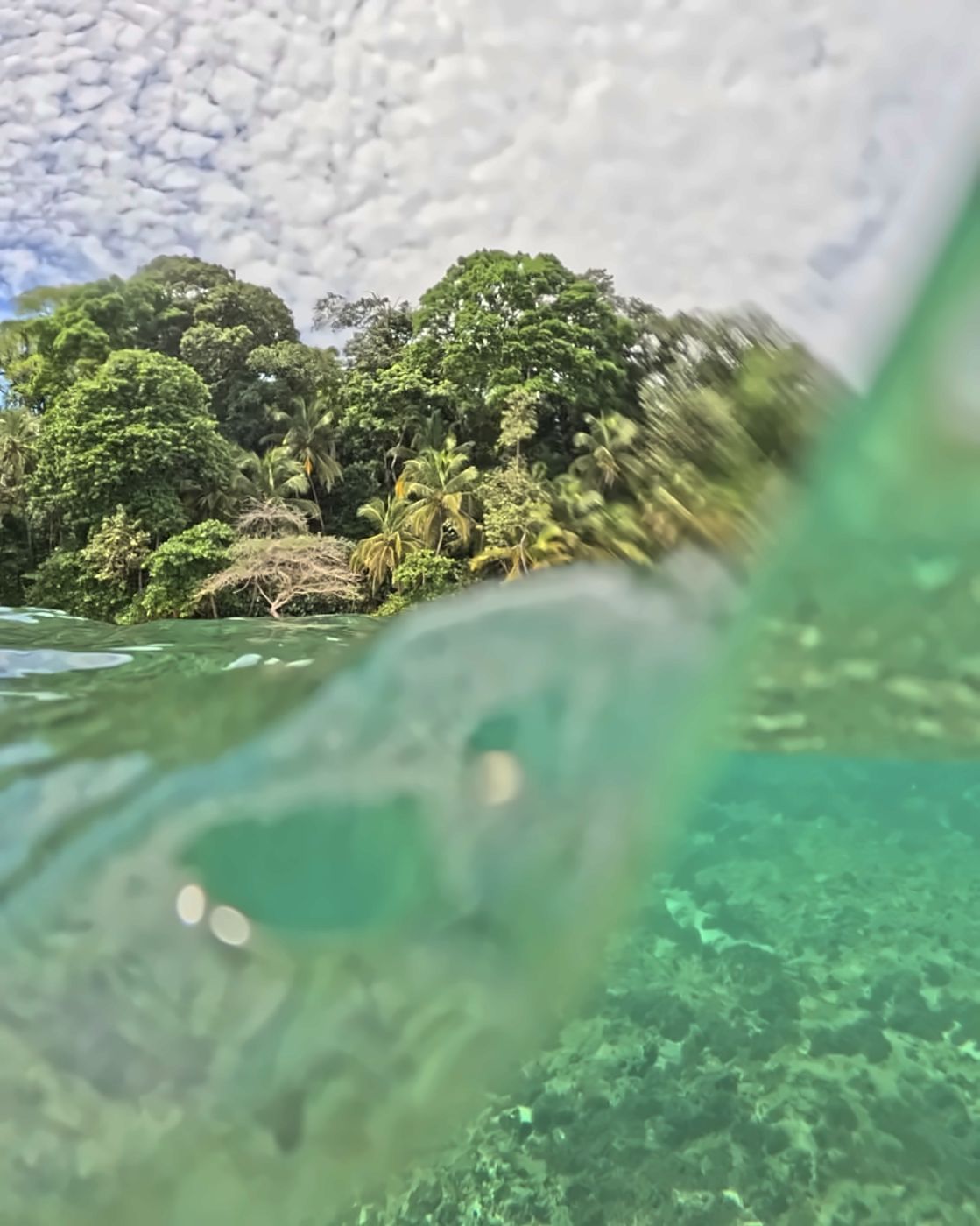
Los corales, algas y animales de la zona entre mareas y de la parte más somera quedaron expuestos al aire y murieron poco después. En el arrecife de Cahuita se quebraron corales, se abrieron grietas en la estructura y partes del frente se derrumbaron.
Corals, algae and animals of the intertidal zone and the shallowest water were exposed to the air and died soon after. On the Cahuita reef corals broke, cracks opened in the reef structure and parts of the reef front slumped.
No fue la primera vezIt was not the first time
Cahuita y Puerto Viejo están construidos sobre arrecifes fósiles levantados: coral antiguo que hoy es tierra firme. Esos arrecifes sugieren que esta costa sube a empujones desde hace muchísimo tiempo. El de 1991 fue solo el más reciente.
Cahuita and Puerto Viejo are built on uplifted fossil reefs: ancient coral that is now dry land. Those reefs suggest this coast has been rising in jolts for a very long time. 1991 was only the latest.
Y la vida volvióAnd life came back
Con los años, la laguna arrecifal de Punta Cahuita se recuperó y se registraron corales nuevos asentándose en el arrecife. Más al sur, en Gandoca, pasó lo contrario: la laguna se hundió, el mar entró un poco más y el manglar creció. Su área se triplicó entre 1976 y 2000, en parte por ese cambio y en parte por el sedimento de los ríos.
El arrecife que ves hoy al nadar es, en parte, el que se acomodó después de aquel día.
Over the years the reef lagoon at Punta Cahuita recovered, and new corals were recorded settling on the reef. Further south, at Gandoca, the opposite happened: the lagoon sank, the sea came in a little further and the mangrove grew. Its area tripled between 1976 and 2000, partly because of that change and partly because of river sediment.
The reef you see today when you swim is, in part, the one that settled in after that day.
FuentesSources
- Cortés, J., Soto, R. y Jiménez, C. (1994). Efectos ecológicos del Terremoto de Limón. Revista Geológica de América Central, vol. esp. Terremoto de Limón. AbrirOpen
- Denyer, P., Arias, O. y Personius, S. (1994). Efecto tectónico del terremoto de Limón. Revista Geológica de América Central, vol. esp. Citado en la revisión de abajo.
- Quesada-Román, A. Review of the geomorphological effects of the 1991 Limón earthquake. Revista Geológica de América Central. AbrirOpen
- Cortés, J. et al. (2010). Monitoring coral reefs, seagrasses and mangroves in Costa Rica (CARICOMP). Rev. Biol. Trop. 58 (Supl. 3). AbrirOpen