Tiburón martillo giganteGreat hammerhead
Great hammerheadTiburón martillo gigante
Sphyrna mokarran
Sphyrnidae · TiburonesSharks
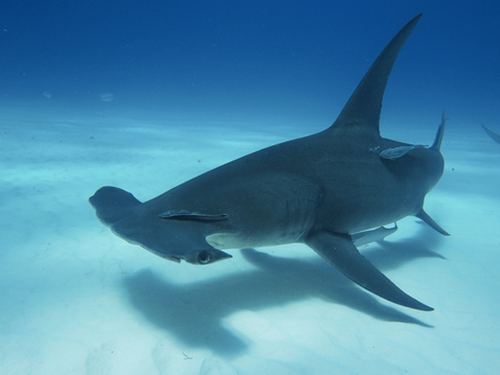
Nada inclinado de lado para ahorrar energía, usando su dorsal alta como ala.
It swims tilted on its side to save energy, using its tall dorsal like a wing.
Cómo reconocerloHow to recognise it
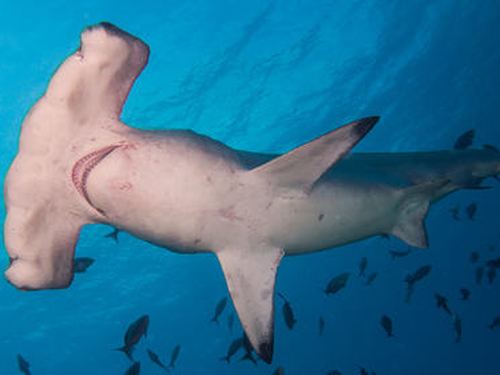
El martillo más grande: cabeza casi recta con muesca central y una aleta dorsal muy alta en forma de hoz.
The biggest hammerhead: nearly straight head with a central notch and a very tall sickle-shaped dorsal fin.
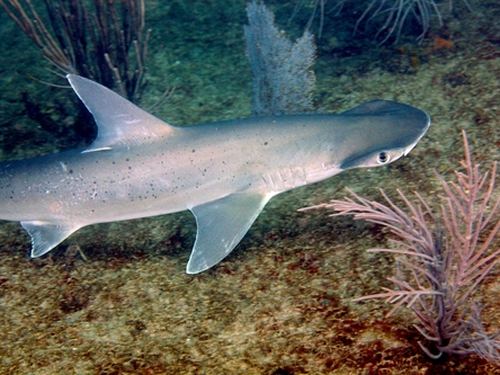
Fíjate enLook for: Cabeza recta; dorsal muy altaStraight head; very tall dorsal
Se confunde conOften confused with
Cómo viveHow it lives
Caza rayas en el fondo arenoso, sujetándolas con la cabeza. Solitario y nómada. En peligro crítico.
Hunts stingrays on sandy bottoms, pinning them with its head. Solitary and nomadic. Critically endangered.
De dónde viene el nombreWhere the name comes from
Sphyrna. "Martillo" en griego.Greek for "hammer".
FichaData sheet
- Tamaño máximoMaximum size
- 6 m (longitud total)6 m (total length)
- AlimentaciónDiet
- Come pecesEats fish
- ActividadActivity
- De día y de nocheDay and night
- Dónde viveHabitat
- Aguas abiertas, arenaOpen water, sand
- En esta costaOn this coast
- Muy raraVery rare
- Estado globalGlobal status
- CR En peligro críticoCritically endangered (Lista Roja UICN)(IUCN Red List)
- RegistroRecord
- Visitante ocasional: vive mar adentro y rara vez se acerca a la costaOccasional visitor: lives offshore and rarely comes near the coast
Registros en esta costaRecords on this coast
observaciones verificadas en iNaturalist entre Cahuita y Punta Mona. Puesto 238 de 315.
verified iNaturalist observations between Cahuita and Punta Mona. Rank 238 of 315.
Mide cuánto se fotografía, no cuántos hay: lo grande, colorido y somero se registra más.
This measures how often it is photographed, not how many there are: big, colourful, shallow things get recorded more.