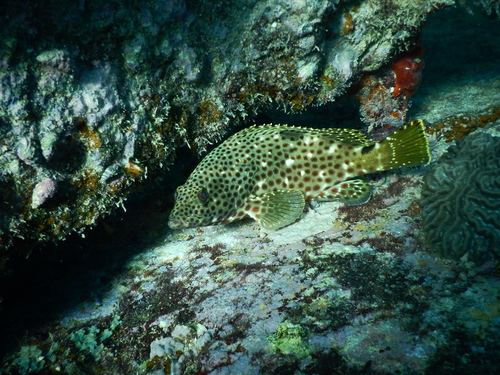
Cabrilla payasoRock hind
Rock hindCabrilla payaso
Epinephelus adscensionis
Epinephelidae · Meros y serranosGroupers & basses
Su patrón de puntos le permite esconderse entre rocas y algas.
Its spotted pattern lets it hide among rocks and algae.
Cómo reconocerloHow to recognise it
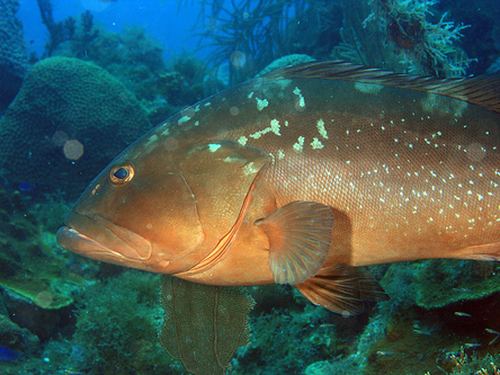
Pálida con puntos rojizos y manchas oscuras en el lomo; aletas sin borde negro.
Pale with reddish spots and dark blotches on the back; fins without a black edge.
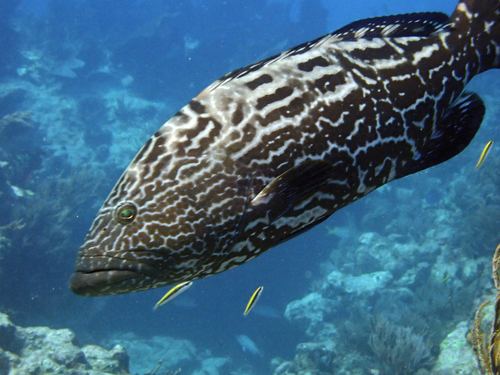
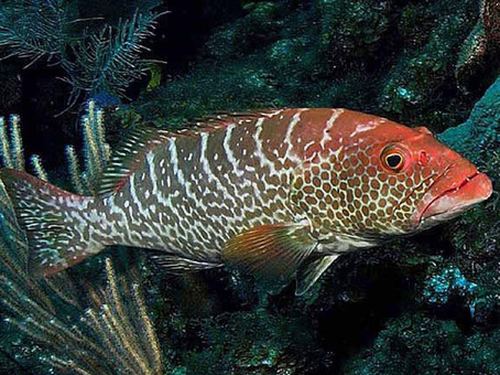
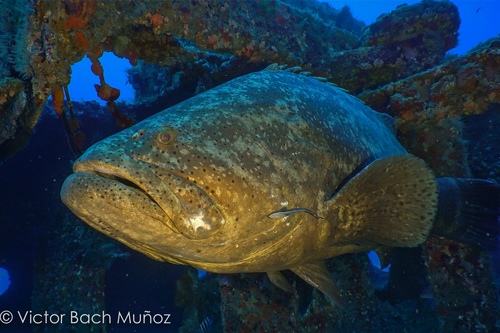
Fíjate enLook for: Puntos rojos, aletas sin borde negroRed spots, fins without black edges
Se confunde conOften confused with
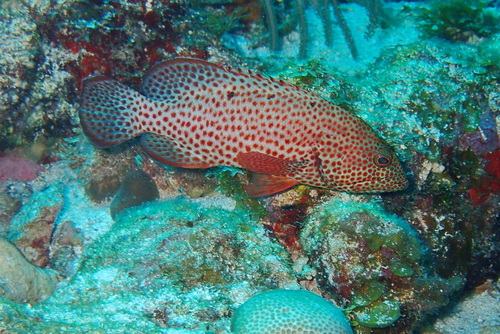
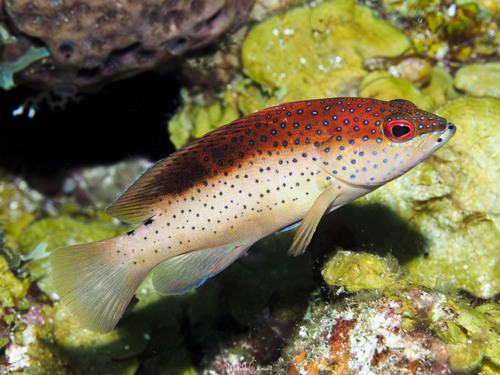
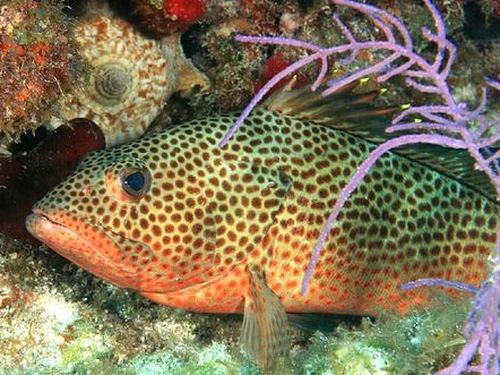
Cómo viveHow it lives
Vive en arrecifes rocosos someros; come cangrejos.
Lives on shallow rocky reefs; eats crabs.
De dónde viene el nombreWhere the name comes from
Epinephelus. "Nublado" en griego, quizá por sus ojos o sus manchas.Greek for "clouded", perhaps for its eyes or blotches.
FichaData sheet
- Tamaño máximoMaximum size
- 60 cm (longitud total)60 cm (total length)
- AlimentaciónDiet
- Come invertebradosEats invertebrates
- ActividadActivity
- De día y de nocheDay and night
- Dónde viveHabitat
- Arrecife, cresta arrecifalReef, reef crest
- En esta costaOn this coast
- Muy raraVery rare
- RegistroRecord
- Registrado en la región (Limón a Bocas del Toro)Recorded in the region (Limón to Bocas del Toro)
Registros en esta costaRecords on this coast
observaciones verificadas en iNaturalist entre Cahuita y Punta Mona. Puesto 271 de 315.
verified iNaturalist observations between Cahuita and Punta Mona. Rank 271 of 315.
Mide cuánto se fotografía, no cuántos hay: lo grande, colorido y somero se registra más.
This measures how often it is photographed, not how many there are: big, colourful, shallow things get recorded more.
FuentesSources
- iNaturalist (región). Observaciones entre Limón (CR) y Bocas del Toro (Panamá), consulta nov. 2026. AbrirOpen