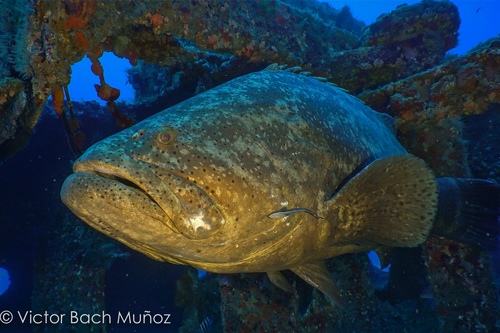
Mero guasaAtlantic goliath grouper
Atlantic goliath grouperMero guasa
Epinephelus itajara (Lichtenstein, 1822)
Epinephelidae · Meros y serranosGroupers & basses
Puede pesar más de 300 kg y hace un "bum" grave con la vejiga para marcar territorio.
It can weigh over 300 kg and makes a deep "boom" with its swim bladder to mark territory.
Cómo reconocerloHow to recognise it
Mero enorme, marrón amarillento con manchas oscuras pequeñas y barras irregulares; cabeza ancha y aletas redondeadas.
Huge grouper, yellowish brown with small dark spots and irregular bars; broad head and rounded fins.
Fíjate enLook for: Enorme, pardo con manchasHuge, brown and blotched
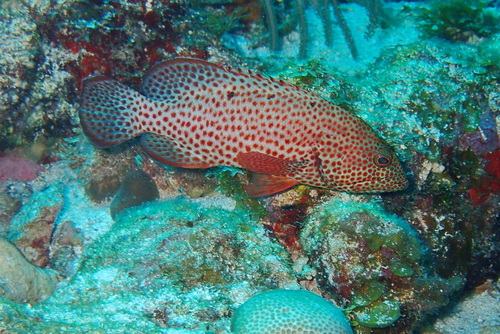
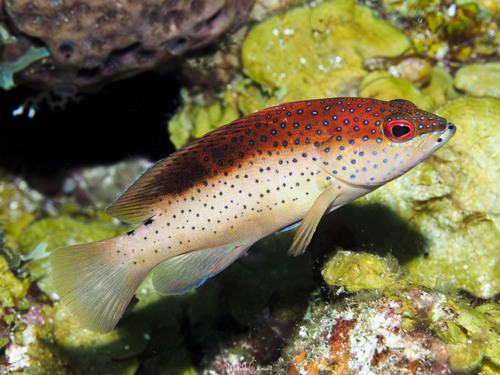
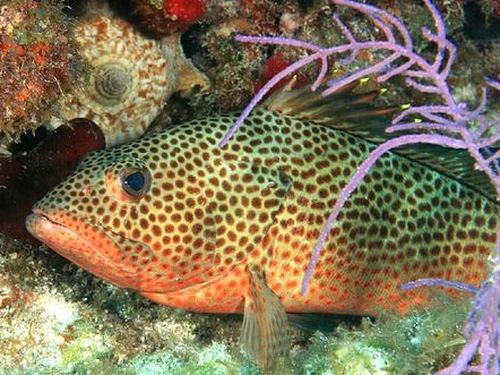
Se confunde conOften confused with
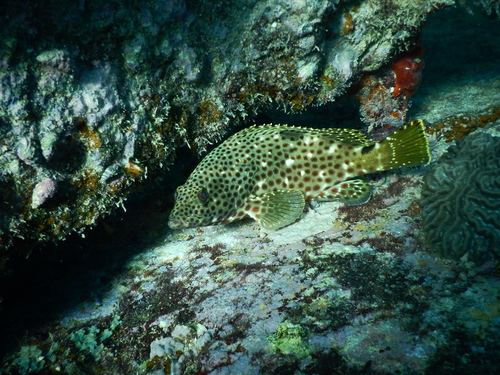
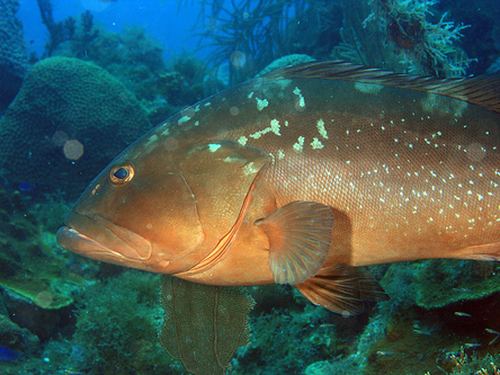
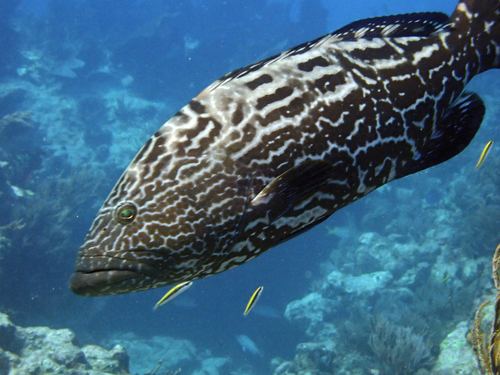
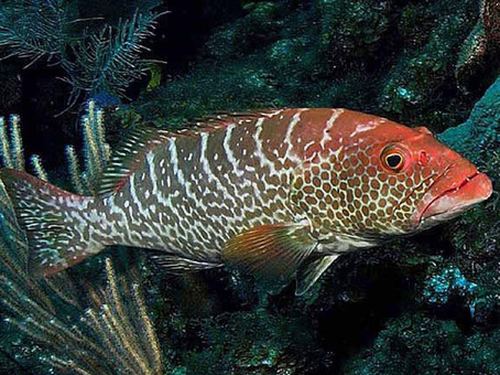
Cómo viveHow it lives
Puede superar los 300 kg. Territorial en cuevas y grandes salientes. Protegido en gran parte de su distribución.
Can exceed 300 kg. Holds territory in caves and big ledges. Protected across much of its range.
De dónde viene el nombreWhere the name comes from
Epinephelus. "Nublado" en griego, quizá por sus ojos o sus manchas.Greek for "clouded", perhaps for its eyes or blotches.
FichaData sheet
- Tamaño máximoMaximum size
- 2,5 m (longitud total)2.5 m (total length)
- AlimentaciónDiet
- Come pecesEats fish
- ActividadActivity
- De día y de nocheDay and night
- Dónde viveHabitat
- Cuevas y salientes, manglarCaves and ledges, mangrove
- En esta costaOn this coast
- Muy raraVery rare
- Estado globalGlobal status
- VU VulnerableVulnerable (Lista Roja UICN)(IUCN Red List)
Registros en esta costaRecords on this coast
observaciones verificadas en iNaturalist entre Cahuita y Punta Mona. Puesto 189 de 315.
verified iNaturalist observations between Cahuita and Punta Mona. Rank 189 of 315.
Mide cuánto se fotografía, no cuántos hay: lo grande, colorido y somero se registra más.
This measures how often it is photographed, not how many there are: big, colourful, shallow things get recorded more.