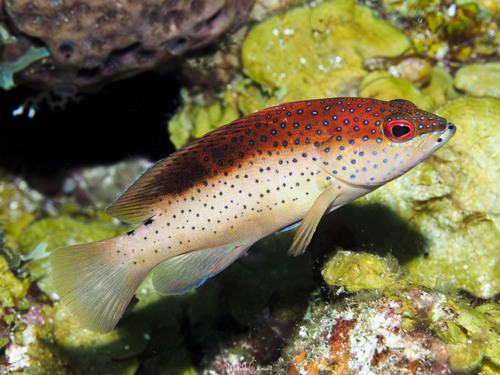
Cherna cabrillaConey
ConeyCherna cabrilla
Cephalopholis fulva
Epinephelidae · Meros y serranosGroupers & basses
Tiene tres "trajes": rojo, bicolor y amarillo dorado.
It wears three "outfits": red, bicolour and golden yellow.
Cómo reconocerloHow to recognise it
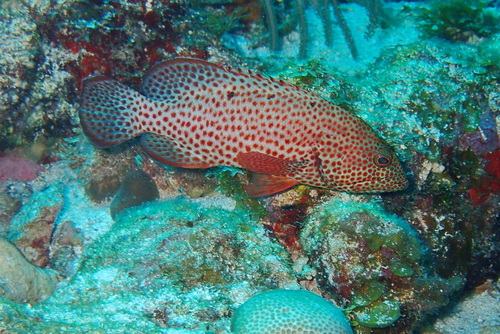
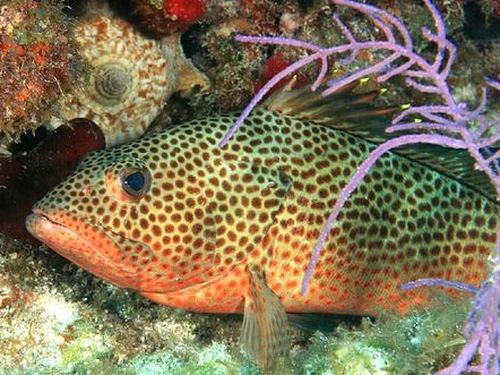
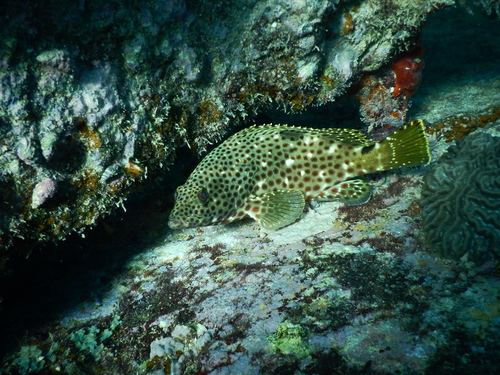
Mero pequeño de color variable (rojizo, bicolor o amarillo) con puntos azules y dos puntos negros en la mandíbula.
Small grouper of variable color (reddish, bicolor or yellow) with blue spots and two black dots on the chin.
Fíjate enLook for: Puntos azules y dos puntos negros en el labioBlue dots and two black dots on the lip
| Fase rojaRed phase | Rojo con puntos azulesRed with blue dots |
|---|---|
| Fase bicolorBicolour phase | Oscuro arriba, pálido abajoDark above, pale below |
| Fase doradaGolden phase | Amarillo doradoGolden yellow |
Se confunde conOften confused with
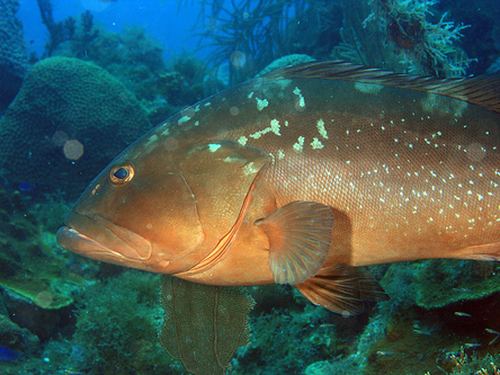
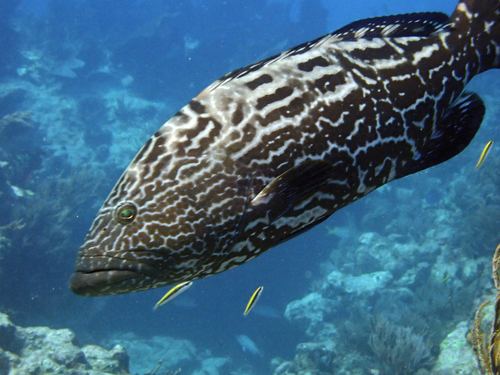
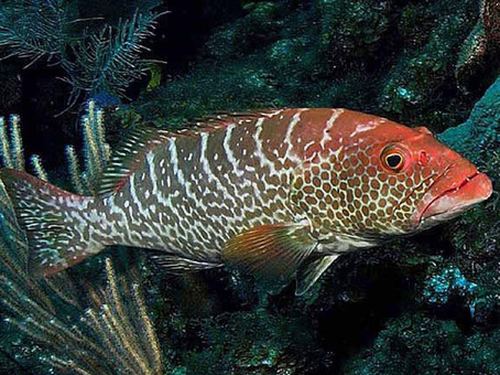
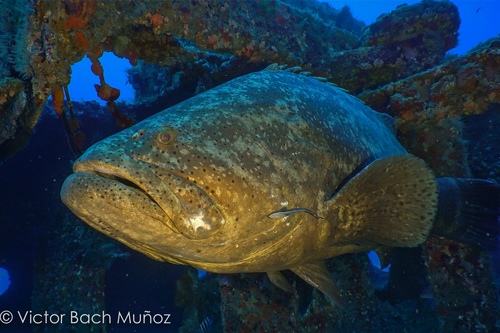
Cómo viveHow it lives
De dónde viene el nombreWhere the name comes from
Cephalopholis. "Cabeza con escamas" en griego.Greek for "scaly head".
FichaData sheet
- Tamaño máximoMaximum size
- 41 cm (longitud total)41 cm (total length)
- AlimentaciónDiet
- Come pecesEats fish
- ActividadActivity
- De día y de nocheDay and night
- Dónde viveHabitat
- ArrecifeReef
- En esta costaOn this coast
- RaraRare
Registros en esta costaRecords on this coast
observaciones verificadas en iNaturalist entre Cahuita y Punta Mona. Puesto 188 de 315.
verified iNaturalist observations between Cahuita and Punta Mona. Rank 188 of 315.
Mide cuánto se fotografía, no cuántos hay: lo grande, colorido y somero se registra más.
This measures how often it is photographed, not how many there are: big, colourful, shallow things get recorded more.
FuentesSources
- Phillips & Pérez-Cruet 1984. A comparative survey of reef fishes in Caribbean and Pacific Costa Rica. Rev. Biol. Trop. 32(1). AbrirOpen