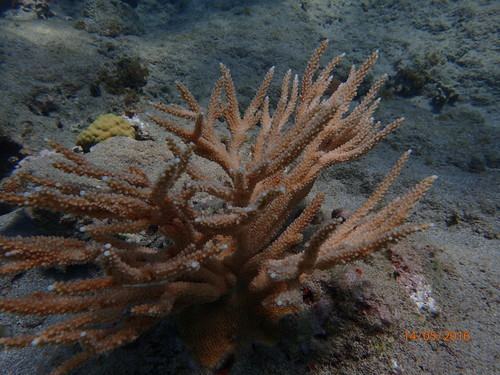
Coral cuerno de ciervoStaghorn coral
Staghorn coralCoral cuerno de ciervo
Acropora cervicornis
Acroporidae
Cómo reconocerloHow to recognise it
Ramas cilíndricas como astas de ciervo. Casi desaparecido aquí: fue extraído para la venta.
Cylindrical branches like deer antlers. Nearly gone here: it was harvested for sale.
Cómo viveHow it lives
FichaData sheet
- Tamaño máximoMaximum size
- 2 m (tamaño de colonia)2 m (colony size)
- AlimentaciónDiet
- Fotosintético (zooxantelas o algas)Photosynthetic (zooxanthellae or algae)
- ActividadActivity
- De día y de nocheDay and night
- Dónde viveHabitat
- ArrecifeReef
- En esta costaOn this coast
- Muy raraVery rare
- Estado globalGlobal status
- EN En peligroEndangered (Lista Roja UICN)(IUCN Red List)
Registros en esta costaRecords on this coast
observaciones verificadas en iNaturalist entre Cahuita y Punta Mona. Puesto 196 de 315.
verified iNaturalist observations between Cahuita and Punta Mona. Rank 196 of 315.
Mide cuánto se fotografía, no cuántos hay: lo grande, colorido y somero se registra más.
This measures how often it is photographed, not how many there are: big, colourful, shallow things get recorded more.
Lo que dicen los estudios aquíWhat studies here say
En Gandoca-Manzanillo se extraía para vender como recuerdo; ya en 1992 era difícil encontrarlo vivo.
In Gandoca-Manzanillo it was taken to sell as a souvenir; by 1992 it was hard to find alive.
FuentesSources: Cortés 1992
FuentesSources
- Cortés 1992. Los arrecifes coralinos del Refugio Nacional de Vida Silvestre Gandoca-Manzanillo, Limón, Costa Rica. Rev. Biol. Trop. 40(3). AbrirOpen