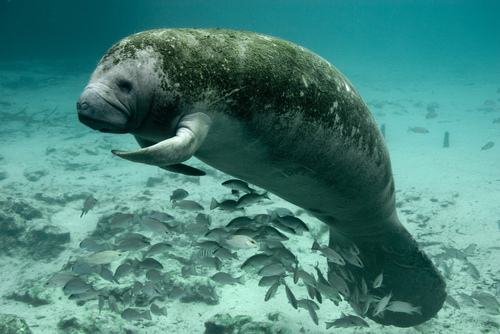
Manatí del CaribeWest Indian manatee
West Indian manateeManatí del Caribe
Trichechus manatus Linnaeus, 1758
Trichechidae
Cómo reconocerloHow to recognise it
Cuerpo gris robusto, cola en forma de remo redondeado, labio superior con vibrisas y sin aleta dorsal.
Robust grey body, rounded paddle-shaped tail, whiskered upper lip and no dorsal fin.
Cómo viveHow it lives
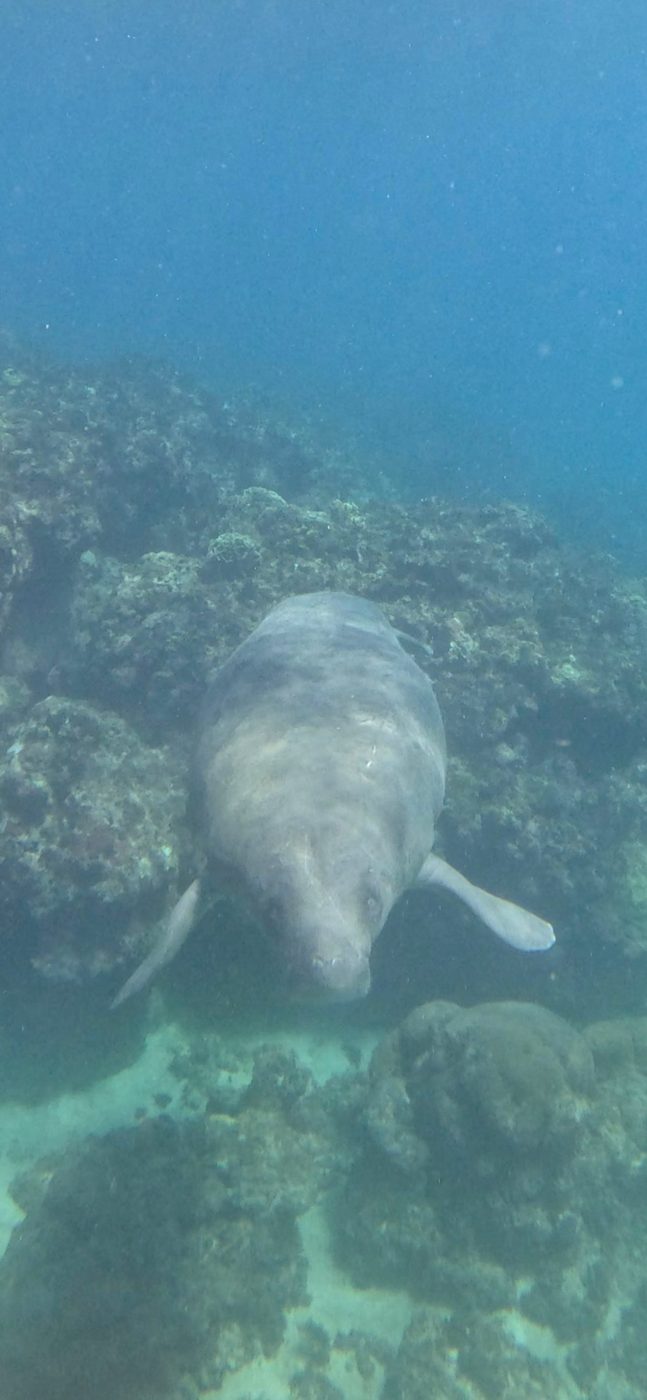
Más común en ríos y lagunas; un encuentro en el arrecife es excepcional.
More common in rivers and lagoons; an encounter on the reef is exceptional.
FichaData sheet
- Tamaño máximoMaximum size
- 4 m (largo corporal)4 m (body length)
- AlimentaciónDiet
- HerbívoroHerbivore
- ActividadActivity
- De día y de nocheDay and night
- Dónde viveHabitat
- Pastos marinos, desembocaduras, manglarSeagrass, river mouths, mangrove
- En esta costaOn this coast
- Muy raraVery rare
- Estado globalGlobal status
- VU VulnerableVulnerable (Lista Roja UICN)(IUCN Red List)
Registros en esta costaRecords on this coast
observaciones verificadas en iNaturalist entre Cahuita y Punta Mona. Puesto 195 de 315.
verified iNaturalist observations between Cahuita and Punta Mona. Rank 195 of 315.
Mide cuánto se fotografía, no cuántos hay: lo grande, colorido y somero se registra más.
This measures how often it is photographed, not how many there are: big, colourful, shallow things get recorded more.