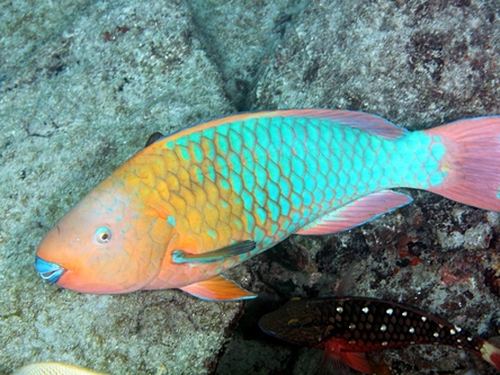
Loro guacamayoRainbow parrotfish
Rainbow parrotfishLoro guacamayo
Scarus guacamaia
Scaridae · LorosParrotfish
Sin manglares no hay loros guacamayo: sus juveniles crecen ahí.
Without mangroves there are no rainbow parrotfish: their young grow up there.
Cómo reconocerloHow to recognise it
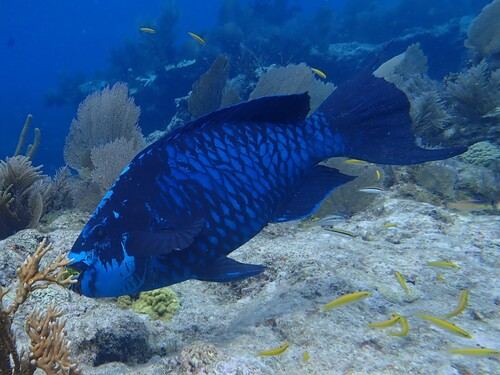
El loro más grande del Atlántico: cabeza naranja, cuerpo verde y dientes verdes.
The largest Atlantic parrotfish: orange head, green body and green teeth.
Fíjate enLook for: Cabeza naranja, cuerpo verde, muy grandeOrange head, green body, very large
Se confunde conOften confused with
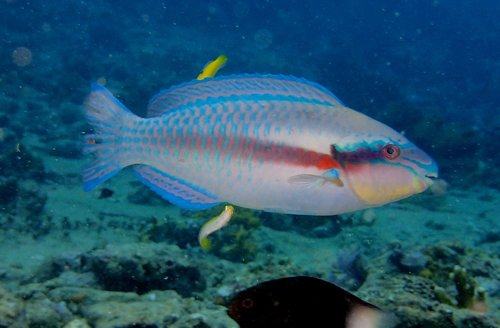
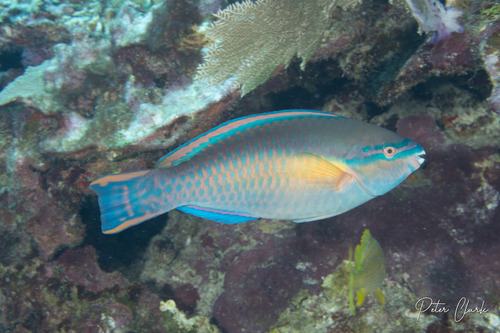
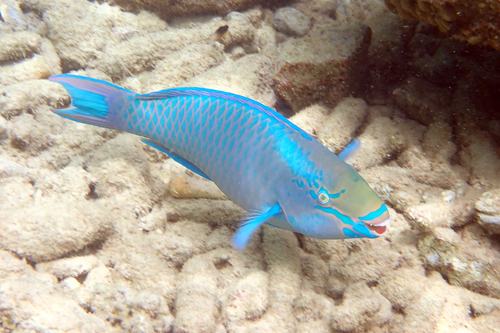
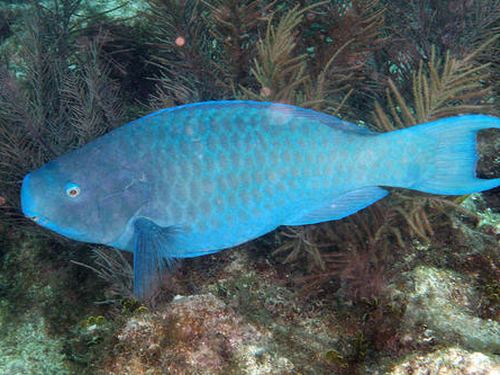
Cómo viveHow it lives
De joven depende de los manglares. Duerme en cuevas y recuerda sus rutas. Casi amenazado.
Depends on mangroves when young. Sleeps in caves and remembers its routes. Near threatened.
De dónde viene el nombreWhere the name comes from
Scarus. "Skaros", nombre griego antiguo del pez loro."Skaros", the ancient Greek name for parrotfish.
FichaData sheet
- Tamaño máximoMaximum size
- 1,2 m (longitud total)1.2 m (total length)
- AlimentaciónDiet
- HerbívoroHerbivore
- ActividadActivity
- De díaBy day
- Dónde viveHabitat
- Arrecife, manglarReef, mangrove
- En esta costaOn this coast
- RaraRare
- Estado globalGlobal status
- NT Casi amenazadaNear threatened (Lista Roja UICN)(IUCN Red List)
- RegistroRecord
- Registrado en la región (Limón a Bocas del Toro)Recorded in the region (Limón to Bocas del Toro)
Registros en esta costaRecords on this coast
observaciones verificadas en iNaturalist entre Cahuita y Punta Mona. Puesto 247 de 315.
verified iNaturalist observations between Cahuita and Punta Mona. Rank 247 of 315.
Mide cuánto se fotografía, no cuántos hay: lo grande, colorido y somero se registra más.
This measures how often it is photographed, not how many there are: big, colourful, shallow things get recorded more.
FuentesSources
- iNaturalist (región). Observaciones entre Limón (CR) y Bocas del Toro (Panamá), consulta nov. 2026. AbrirOpen