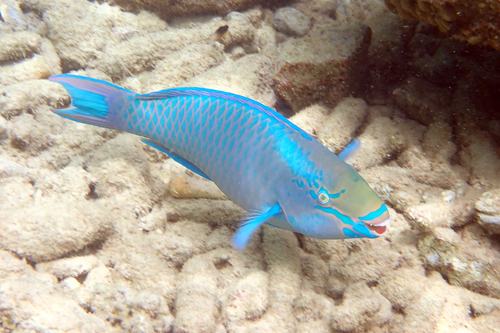
Loro reinaQueen parrotfish
Queen parrotfishLoro reina
Scarus vetula Bloch & Schneider, 1801
Scaridae · LorosParrotfish
Un loro grande puede producir cientos de kilos de arena al año.
A large parrotfish can produce hundreds of kilos of sand a year.
Cómo reconocerloHow to recognise it
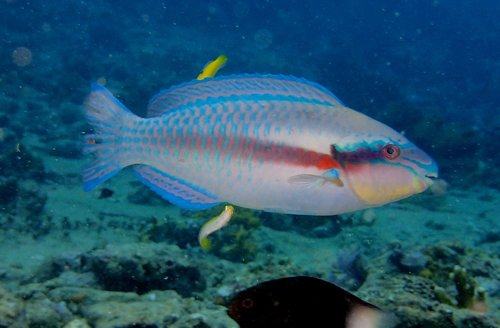
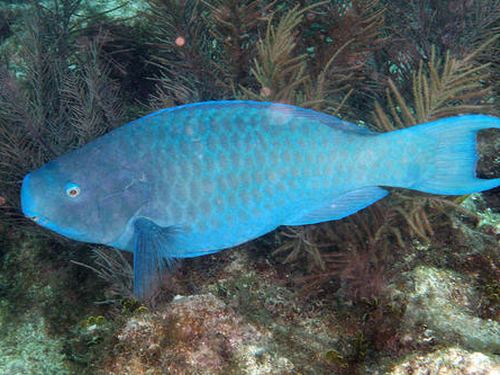
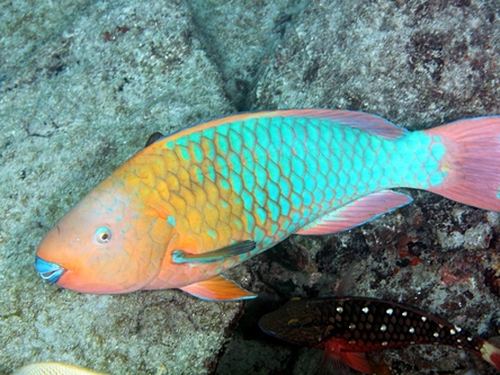
Macho verde-azul con bandas anaranjadas alrededor de la boca y los ojos y aletas con borde naranja. Hembra gris oscuro con una franja blanca ancha a cada lado.
Male blue-green with orange bands around the mouth and eyes and orange-edged fins. Female dark grey with a broad white stripe along each side.
Fíjate enLook for: Macho azul verdoso con bordes naranjaBlue-green male with orange edges
| InicialInitial | Gris oscuro con franja blancaDark grey with a white stripe |
|---|---|
| Macho finalTerminal male | Azul verdoso con bordes naranjaBlue-green with orange edges |
Se confunde conOften confused with
Cómo viveHow it lives
De noche secreta un capullo de mucosidad en el que duerme, que reduce la detección por depredadores y parásitos.
At night it secretes a mucus cocoon to sleep in, reducing detection by predators and parasites.
De dónde viene el nombreWhere the name comes from
Scarus. "Skaros", nombre griego antiguo del pez loro."Skaros", the ancient Greek name for parrotfish.
FichaData sheet
- Tamaño máximoMaximum size
- 61 cm (longitud total)61 cm (total length)
- AlimentaciónDiet
- HerbívoroHerbivore
- ActividadActivity
- De díaBy day
- Dónde viveHabitat
- ArrecifeReef
- En esta costaOn this coast
- FrecuenteFrequent
Registros en esta costaRecords on this coast
observaciones verificadas en iNaturalist entre Cahuita y Punta Mona. Puesto 161 de 315.
verified iNaturalist observations between Cahuita and Punta Mona. Rank 161 of 315.
Mide cuánto se fotografía, no cuántos hay: lo grande, colorido y somero se registra más.
This measures how often it is photographed, not how many there are: big, colourful, shallow things get recorded more.