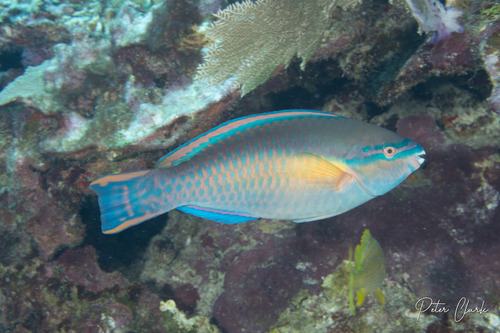
Loro princesaPrincess parrotfish
Princess parrotfishLoro princesa
Scarus taeniopterus
Scaridae · LorosParrotfish
Se mueve en grupos grandes que se unen a otros loros.
It moves in big groups that join other parrotfish.
Cómo reconocerloHow to recognise it
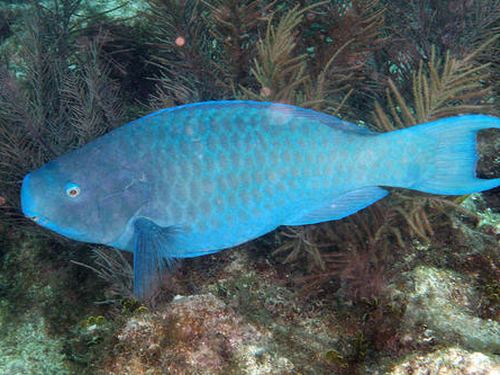
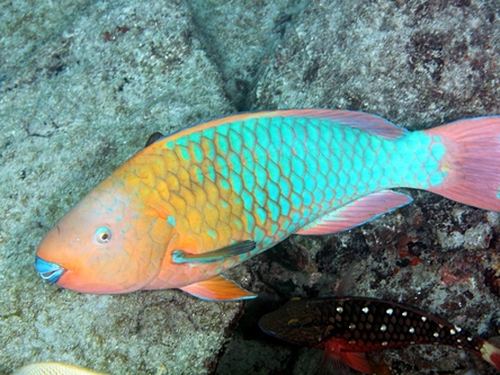
Fase inicial con tres franjas oscuras; macho verde-azul con franja naranja y cola con bordes naranja.
Initial phase with three dark stripes; male blue-green with an orange stripe and orange-edged tail.
Fíjate enLook for: Franjas y cola con bordes oscurosStripes and dark-edged tail
| InicialInitial | Franjas oscurasDark stripes |
|---|---|
| Macho finalTerminal male | Verde azulado con franja amarillaBlue-green with a yellow stripe |
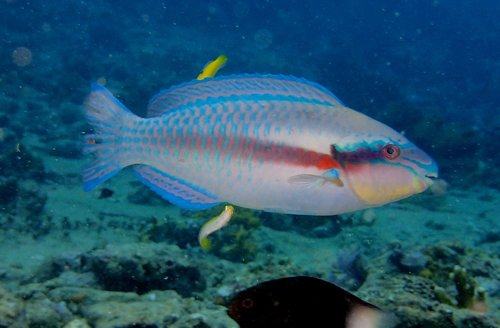
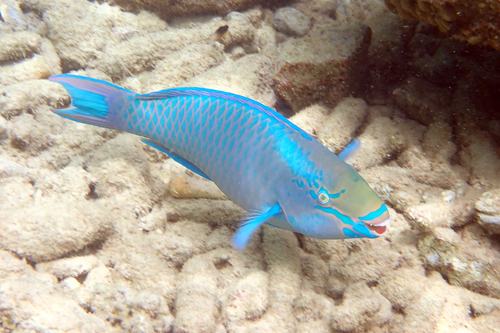
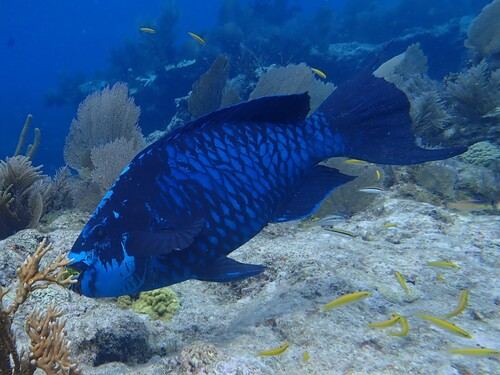
Se confunde conOften confused with
Cómo viveHow it lives
De dónde viene el nombreWhere the name comes from
Scarus. "Skaros", nombre griego antiguo del pez loro."Skaros", the ancient Greek name for parrotfish.
FichaData sheet
- Tamaño máximoMaximum size
- 35 cm (longitud total)35 cm (total length)
- AlimentaciónDiet
- HerbívoroHerbivore
- ActividadActivity
- De díaBy day
- Dónde viveHabitat
- ArrecifeReef
- En esta costaOn this coast
- RaraRare
Registros en esta costaRecords on this coast
observaciones verificadas en iNaturalist entre Cahuita y Punta Mona. Puesto 193 de 315.
verified iNaturalist observations between Cahuita and Punta Mona. Rank 193 of 315.
Mide cuánto se fotografía, no cuántos hay: lo grande, colorido y somero se registra más.
This measures how often it is photographed, not how many there are: big, colourful, shallow things get recorded more.
FuentesSources
- Phillips & Pérez-Cruet 1984. A comparative survey of reef fishes in Caribbean and Pacific Costa Rica. Rev. Biol. Trop. 32(1). AbrirOpen