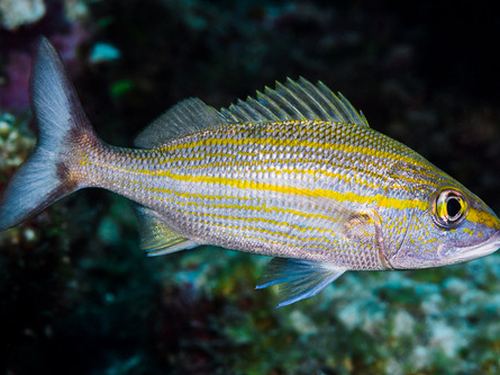
Ronco jeniguanoTomtate
TomtateRonco jeniguano
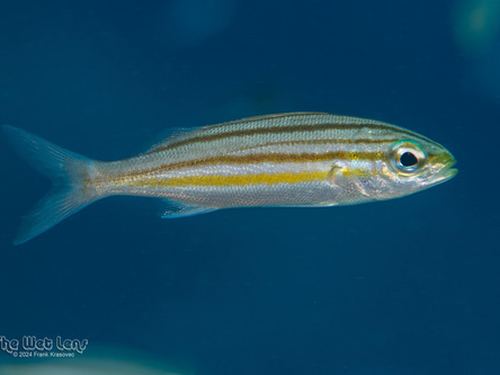
Haemulon aurolineatum
Haemulidae · Pargos, roncos y chopasSnappers, grunts & chubs
Es uno de los roncos más comunes del Caribe y alimento de muchos depredadores.
It is one of the most common Caribbean grunts and food for many predators.
Cómo reconocerloHow to recognise it
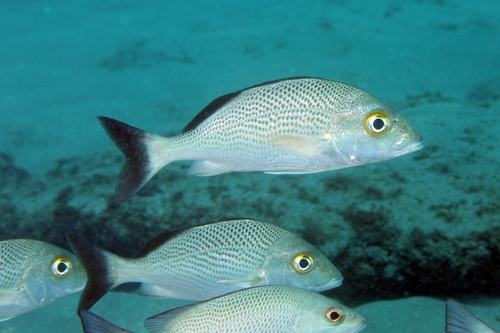
Plateado con una franja amarilla y una mancha negra en la base de la cola.
Silvery with a yellow stripe and a black spot at the tail base.
Fíjate enLook for: Una franja amarilla y mancha negra en la colaOne yellow stripe and black spot at the tail
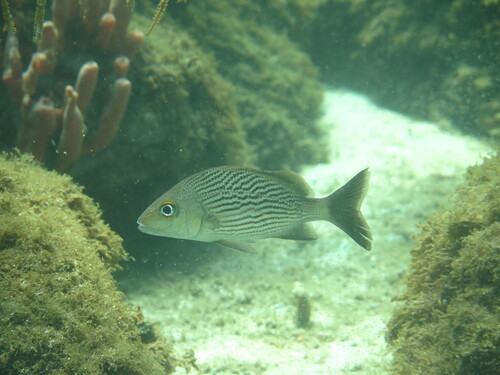
Se confunde conOften confused with
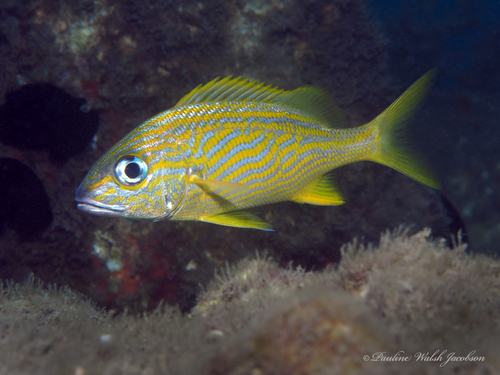
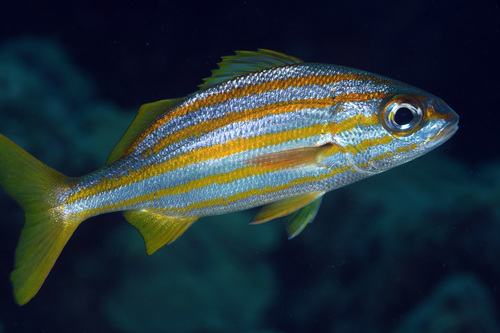
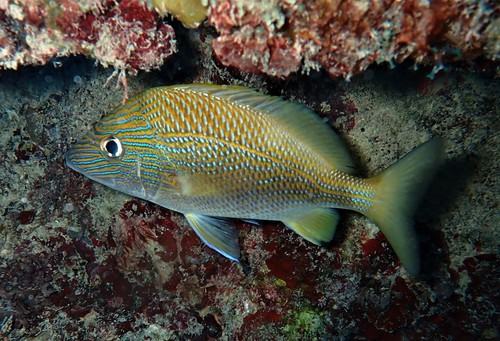
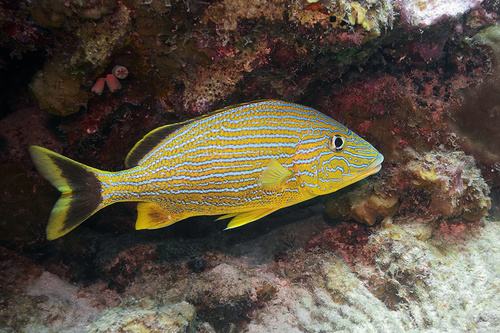
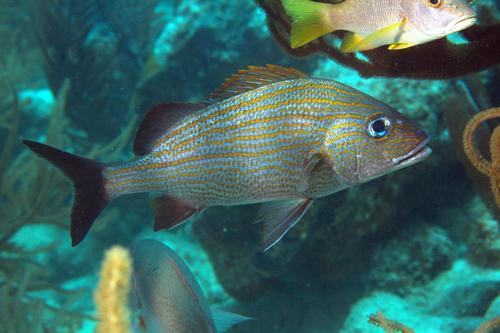
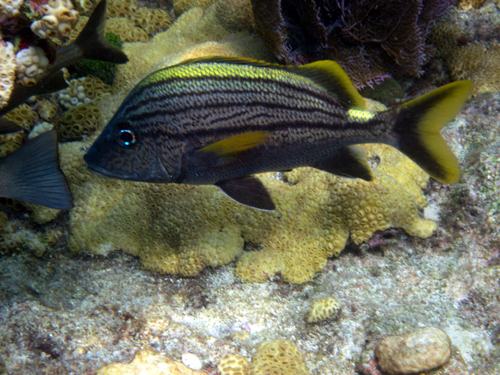
Cómo viveHow it lives
Pasa el día en cardúmenes y sale de noche a comer a la arena.
Spends the day in schools and comes out at night to feed on sand.
De dónde viene el nombreWhere the name comes from
Haemulon. "Encías sangrientas" en griego, por su boca roja por dentro.Greek for "bloody gums", for the red inside of the mouth.
FichaData sheet
- Tamaño máximoMaximum size
- 25 cm (longitud total)25 cm (total length)
- AlimentaciónDiet
- Come invertebradosEats invertebrates
- ActividadActivity
- De nocheBy night
- Dónde viveHabitat
- Arrecife, pastos marinosReef, seagrass
- En esta costaOn this coast
- OcasionalOccasional
- RegistroRecord
- Registrado en la región (Limón a Bocas del Toro)Recorded in the region (Limón to Bocas del Toro)
Registros en esta costaRecords on this coast
observaciones verificadas en iNaturalist entre Cahuita y Punta Mona. Puesto 277 de 315.
verified iNaturalist observations between Cahuita and Punta Mona. Rank 277 of 315.
Mide cuánto se fotografía, no cuántos hay: lo grande, colorido y somero se registra más.
This measures how often it is photographed, not how many there are: big, colourful, shallow things get recorded more.
FuentesSources
- iNaturalist (región). Observaciones entre Limón (CR) y Bocas del Toro (Panamá), consulta nov. 2026. AbrirOpen