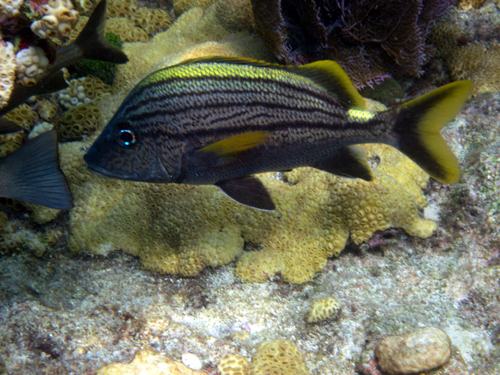
Ronco españolSpanish grunt
Spanish gruntRonco español
Haemulon macrostoma
Haemulidae · Pargos, roncos y chopasSnappers, grunts & chubs
Es uno de los roncos menos comunes del Caribe; verlo es buena señal.
It is one of the less common Caribbean grunts; seeing one is a treat.
Cómo reconocerloHow to recognise it
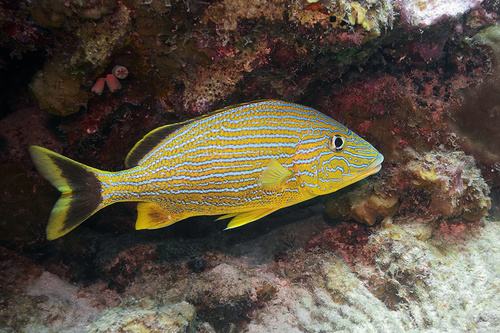
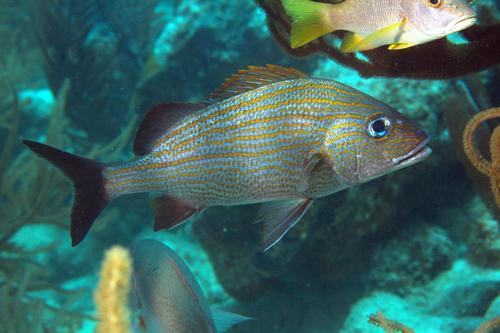
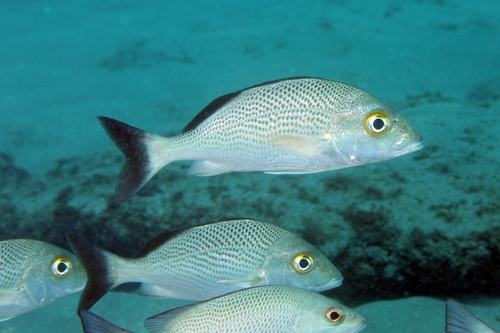
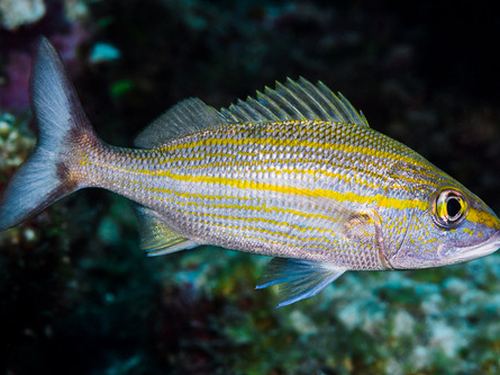
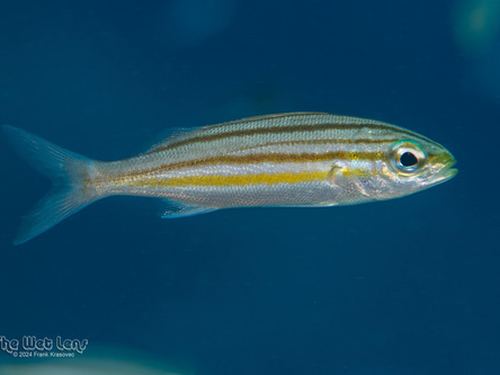
Franjas oscuras finas sobre fondo gris plata y aletas dorsal blanda, caudal y anal amarillas.
Thin dark stripes over silvery grey; soft dorsal, tail and anal fins yellow.
Fíjate enLook for: Franjas negras y amarillas en el lomoBlack and yellow stripes on the back
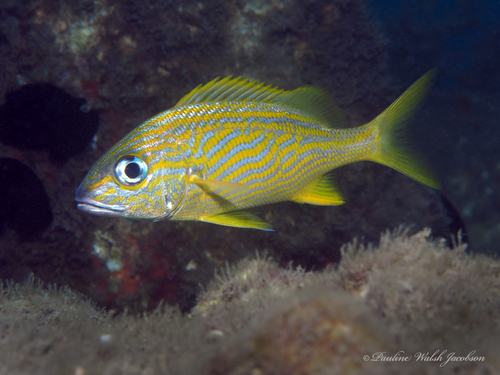
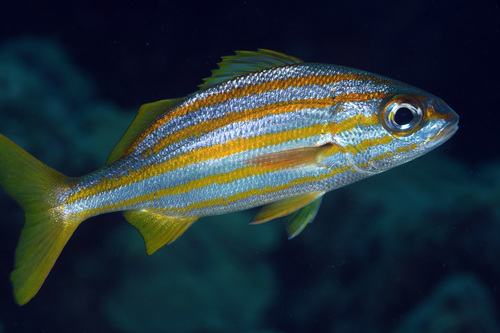
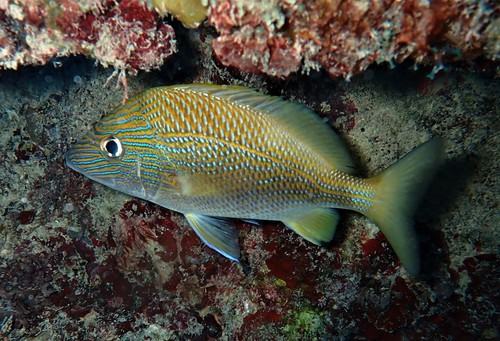
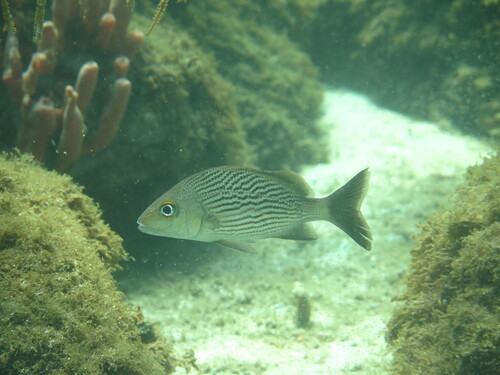
Se confunde conOften confused with
Cómo viveHow it lives
De dónde viene el nombreWhere the name comes from
Haemulon. "Encías sangrientas" en griego, por su boca roja por dentro.Greek for "bloody gums", for the red inside of the mouth.
FichaData sheet
- Tamaño máximoMaximum size
- 43 cm (longitud total)43 cm (total length)
- AlimentaciónDiet
- Come invertebradosEats invertebrates
- ActividadActivity
- De nocheBy night
- Dónde viveHabitat
- Arrecife, cuevas y salientesReef, caves and ledges
- En esta costaOn this coast
- ComúnCommon
Registros en esta costaRecords on this coast
observaciones verificadas en iNaturalist entre Cahuita y Punta Mona. Puesto 17 de 315.
verified iNaturalist observations between Cahuita and Punta Mona. Rank 17 of 315.
Mide cuánto se fotografía, no cuántos hay: lo grande, colorido y somero se registra más.
This measures how often it is photographed, not how many there are: big, colourful, shallow things get recorded more.
FuentesSources
- Phillips & Pérez-Cruet 1984. A comparative survey of reef fishes in Caribbean and Pacific Costa Rica. Rev. Biol. Trop. 32(1). AbrirOpen