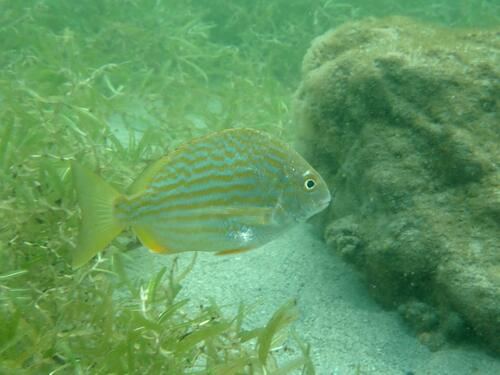
Sargo amarilloWestern Atlantic seabream
Western Atlantic seabreamSargo amarillo
Archosargus rhomboidalis
Sparidae · Pargos, roncos y chopasSnappers, grunts & chubs
Es pariente del famoso sargo chopa (sheepshead) y, como él, tiene dientes anchos para triturar conchas y comer plantas.
A relative of the famous sheepshead, it also has broad teeth for crushing shells and eating plants.
Cómo reconocerloHow to recognise it
Ovalado, con líneas amarillas finas y una mancha negra detrás de la pectoral.
Oval with thin yellow lines and a black spot behind the pectoral.
Cómo viveHow it lives
Común en praderas y manglares.
Common in seagrass and mangroves.
De dónde viene el nombreWhere the name comes from
Archosargus. "Jefe de los sargos"."Chief of the sea breams".
FichaData sheet
- Tamaño máximoMaximum size
- 33 cm (longitud total)33 cm (total length)
- AlimentaciónDiet
- OmnívoroOmnivore
- ActividadActivity
- De díaBy day
- Dónde viveHabitat
- Pastos marinos, manglar, arrecifeSeagrass, mangrove, reef
- En esta costaOn this coast
- OcasionalOccasional
- RegistroRecord
- Registrado en la región (Limón a Bocas del Toro)Recorded in the region (Limón to Bocas del Toro)
Registros en esta costaRecords on this coast
observaciones verificadas en iNaturalist entre Cahuita y Punta Mona. Puesto 310 de 315.
verified iNaturalist observations between Cahuita and Punta Mona. Rank 310 of 315.
Mide cuánto se fotografía, no cuántos hay: lo grande, colorido y somero se registra más.
This measures how often it is photographed, not how many there are: big, colourful, shallow things get recorded more.
FuentesSources
- iNaturalist (región). Observaciones entre Limón (CR) y Bocas del Toro (Panamá), consulta nov. 2026. AbrirOpen