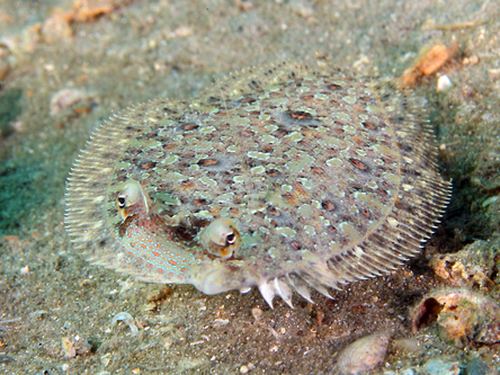
Lenguado oceladoEyed flounder
Eyed flounderLenguado ocelado
Bothus ocellatus
Bothidae
Sus ojos se mueven por separado, como los de un camaleón.
Its eyes move independently, like a chameleon's.
Cómo reconocerloHow to recognise it
Plano, de color arena con anillos y manchas; ambos ojos del mismo lado.
Flat and sand-coloured with rings and spots; both eyes on the same side.
Fíjate enLook for: Pequeño, con anillos tenuesSmall, with faint rings
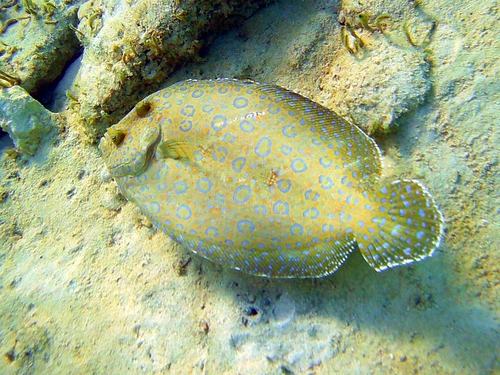
Se confunde conOften confused with
Cómo viveHow it lives
Cambia de color en segundos para combinar con el fondo.
Changes colour in seconds to match the bottom.
De dónde viene el nombreWhere the name comes from
Bothus. "Hoyo" en griego, por el hueco que hace en la arena.Greek for "pit", for the hollow it makes in the sand.
FichaData sheet
- Tamaño máximoMaximum size
- 18 cm (longitud total)18 cm (total length)
- AlimentaciónDiet
- Come invertebradosEats invertebrates
- ActividadActivity
- De díaBy day
- Dónde viveHabitat
- ArenaSand
- En esta costaOn this coast
- RaraRare
- RegistroRecord
- Registrado en la región (Limón a Bocas del Toro)Recorded in the region (Limón to Bocas del Toro)
Registros en esta costaRecords on this coast
observaciones verificadas en iNaturalist entre Cahuita y Punta Mona. Puesto 309 de 315.
verified iNaturalist observations between Cahuita and Punta Mona. Rank 309 of 315.
Mide cuánto se fotografía, no cuántos hay: lo grande, colorido y somero se registra más.
This measures how often it is photographed, not how many there are: big, colourful, shallow things get recorded more.
FuentesSources
- iNaturalist (región). Observaciones entre Limón (CR) y Bocas del Toro (Panamá), consulta nov. 2026. AbrirOpen