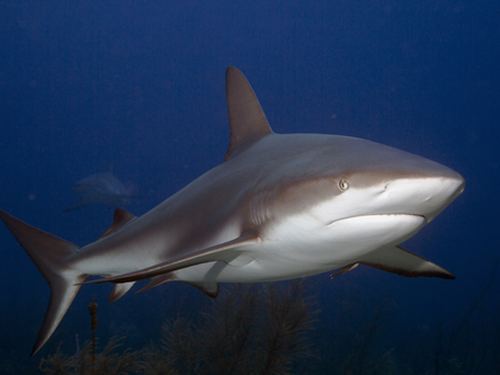
Tiburón de arrecifeCaribbean reef shark
Caribbean reef sharkTiburón de arrecife
Carcharhinus perezi
Carcharhinidae · TiburonesSharks
Puede descansar inmóvil en cuevas, algo raro para un tiburón de su familia.
It can rest motionless in caves, unusual for a shark of its family.
Cómo reconocerloHow to recognise it
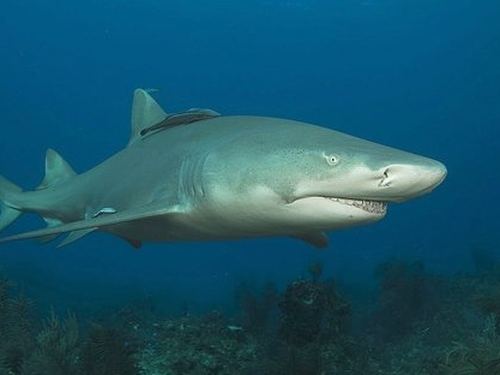
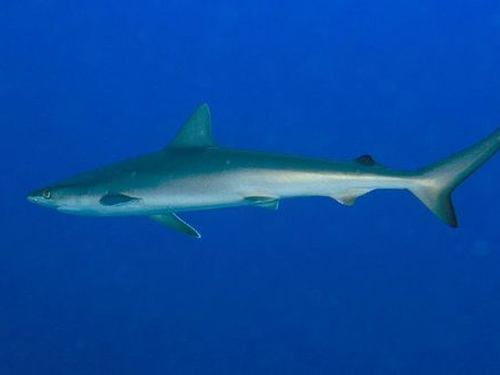
Gris oscuro por encima y blanco por debajo, con una franja blanca en el flanco; puntas de aletas oscuras pero sin negro intenso.
Dark grey above, white below, with a pale stripe on the flank; fin tips dusky but not jet black.
Fíjate enLook for: Puntas de aletas oscuras, no negrasDusky, not black, fin tips
OjoCareful: Normalmente tímido; no lo persigas ni lo alimentes.Usually shy; do not chase or feed it.
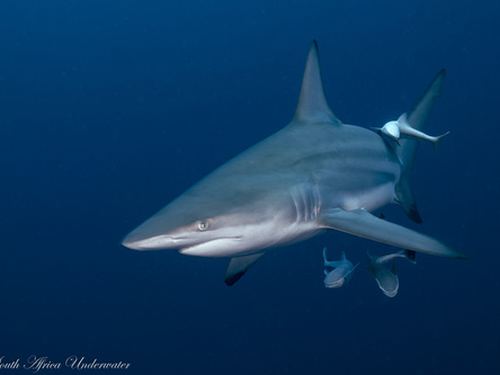
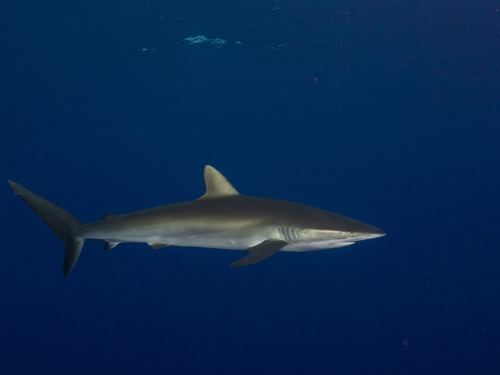
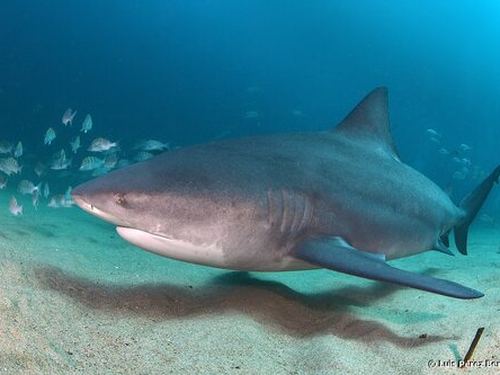
Se confunde conOften confused with
Cómo viveHow it lives
El tiburón típico del arrecife caribeño. Suele quedarse en la pared exterior del arrecife.
The classic Caribbean reef shark. Usually stays on the outer reef wall.
De dónde viene el nombreWhere the name comes from
Carcharhinus. "Nariz afilada" en griego.Greek for "sharp nose".
FichaData sheet
- Tamaño máximoMaximum size
- 3 m (longitud total)3 m (total length)
- AlimentaciónDiet
- Come pecesEats fish
- ActividadActivity
- De día y de nocheDay and night
- Dónde viveHabitat
- Arrecife, aguas abiertasReef, open water
- En esta costaOn this coast
- Muy raraVery rare
- Estado globalGlobal status
- EN En peligroEndangered (Lista Roja UICN)(IUCN Red List)
- RegistroRecord
- Visto por la tripulación; aún sin registro público aquíSeen by the crew; no public record here yet
Registros en esta costaRecords on this coast
observaciones verificadas en iNaturalist entre Cahuita y Punta Mona. Puesto 233 de 315.
verified iNaturalist observations between Cahuita and Punta Mona. Rank 233 of 315.
Mide cuánto se fotografía, no cuántos hay: lo grande, colorido y somero se registra más.
This measures how often it is photographed, not how many there are: big, colourful, shallow things get recorded more.