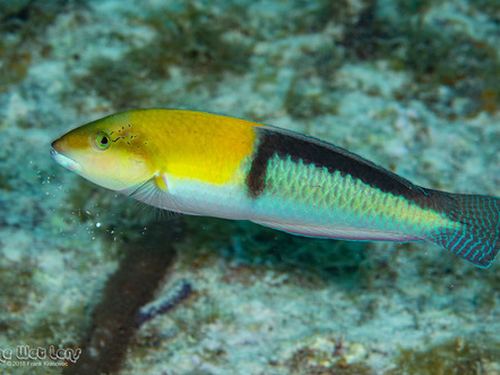
Doncella cabeciamarillaYellowhead wrasse
Yellowhead wrasseDoncella cabeciamarilla
Halichoeres garnoti
Labridae · DoncellasWrasses
Pasa por tres fases de color: juvenil, inicial y macho final.
It goes through three colour phases: juvenile, initial and terminal male.
Cómo reconocerloHow to recognise it
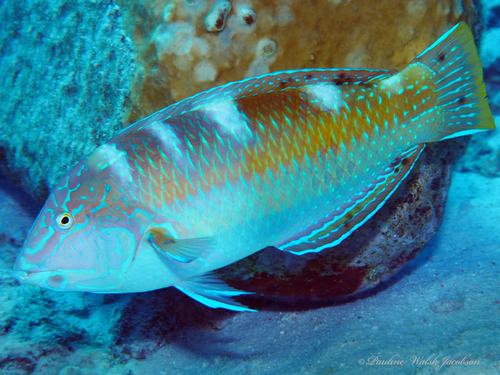
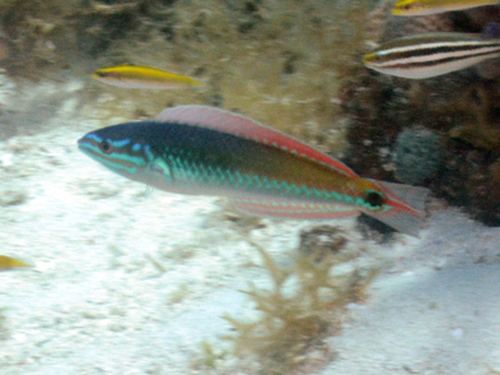
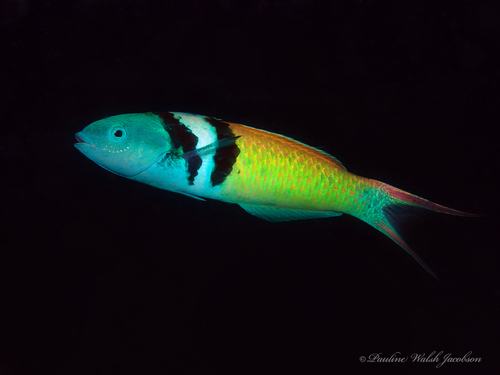
Macho con cabeza amarilla, barra oscura vertical y cola verde azulada; jóvenes amarillos con franja azul.
Male with a yellow head, dark vertical bar and blue-green tail; juveniles yellow with a blue stripe.
Fíjate enLook for: Cabeza amarilla y barra oscuraYellow head and dark bar
| JuvenilJuvenile | Amarillo con franja azulYellow with a blue stripe |
|---|---|
| InicialInitial | Pardo amarillentoYellowish brown |
| Macho finalTerminal male | Cabeza amarilla y barra oscuraYellow head and dark bar |
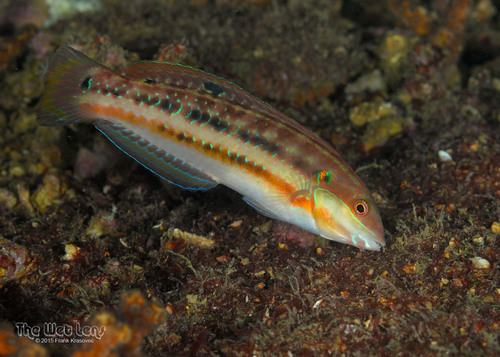
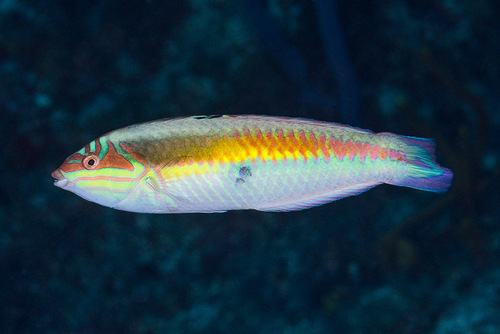
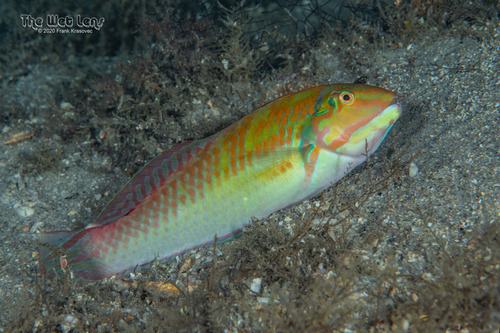
Se confunde conOften confused with
Cómo viveHow it lives
Nada sin parar sobre el arrecife comiendo pequeños crustáceos.
Swims nonstop over the reef eating small crustaceans.
De dónde viene el nombreWhere the name comes from
Halichoeres. "Cerdo de mar" en griego.Greek for "sea pig".
FichaData sheet
- Tamaño máximoMaximum size
- 19 cm (longitud total)19 cm (total length)
- AlimentaciónDiet
- Come invertebradosEats invertebrates
- ActividadActivity
- De díaBy day
- Dónde viveHabitat
- Arrecife, cascajoReef, rubble
- En esta costaOn this coast
- OcasionalOccasional
- RegistroRecord
- Registrado en la región (Limón a Bocas del Toro)Recorded in the region (Limón to Bocas del Toro)
Registros en esta costaRecords on this coast
observaciones verificadas en iNaturalist entre Cahuita y Punta Mona. Puesto 183 de 315.
verified iNaturalist observations between Cahuita and Punta Mona. Rank 183 of 315.
Mide cuánto se fotografía, no cuántos hay: lo grande, colorido y somero se registra más.
This measures how often it is photographed, not how many there are: big, colourful, shallow things get recorded more.