Tiburón ballenaWhale shark
Whale sharkTiburón ballena
Rhincodon typus
Rhincodontidae · TiburonesSharks
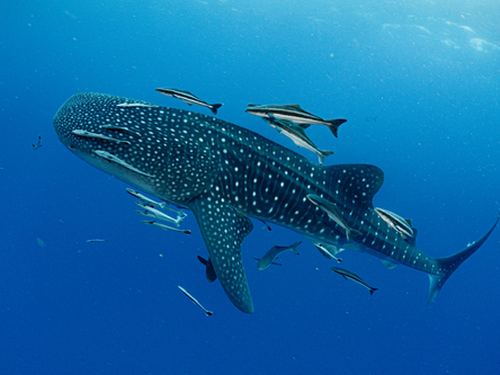
El patrón de puntos de cada tiburón ballena es único, como una huella digital.
Each whale shark's spot pattern is unique, like a fingerprint.
Cómo reconocerloHow to recognise it
Gigante, gris azulado con puntos y líneas blancas en forma de tablero; boca enorme al frente de la cabeza.
Huge, bluish grey with a checkerboard of white spots and lines; enormous mouth at the front of the head.
OjoCareful: Inofensivo. No lo toques y quédate a 3 m o más.Harmless. Do not touch; stay 3 m or more away.
Cómo viveHow it lives
El pez más grande del mundo. Filtra plancton y huevos de peces cerca de la superficie. Pasa de lejos por el Caribe; verlo aquí es suerte pura.
The largest fish in the world. Filters plankton and fish eggs near the surface. Passes through the Caribbean offshore; seeing one here is pure luck.
De dónde viene el nombreWhere the name comes from
Rhincodon. "Dientes de lima" en griego.Greek for "rasp teeth".
FichaData sheet
- Tamaño máximoMaximum size
- 12 m (longitud total)12 m (total length)
- AlimentaciónDiet
- FiltradorFilter feeder
- ActividadActivity
- De díaBy day
- Dónde viveHabitat
- Aguas abiertasOpen water
- En esta costaOn this coast
- Muy raraVery rare
- Estado globalGlobal status
- EN En peligroEndangered (Lista Roja UICN)(IUCN Red List)
- RegistroRecord
- Visitante ocasional: vive mar adentro y rara vez se acerca a la costaOccasional visitor: lives offshore and rarely comes near the coast
Registros en esta costaRecords on this coast
observaciones verificadas en iNaturalist entre Cahuita y Punta Mona. Puesto 229 de 315.
verified iNaturalist observations between Cahuita and Punta Mona. Rank 229 of 315.
Mide cuánto se fotografía, no cuántos hay: lo grande, colorido y somero se registra más.
This measures how often it is photographed, not how many there are: big, colourful, shallow things get recorded more.