SábaloTarpon
TarponSábalo
Megalops atlanticus Valenciennes, 1847
Megalopidae · Jureles y mar abiertoJacks & open water
Puede tragar aire de la superficie con su vejiga, como un pulmón.
It can gulp air at the surface into its swim bladder, like a lung.
Cómo reconocerloHow to recognise it
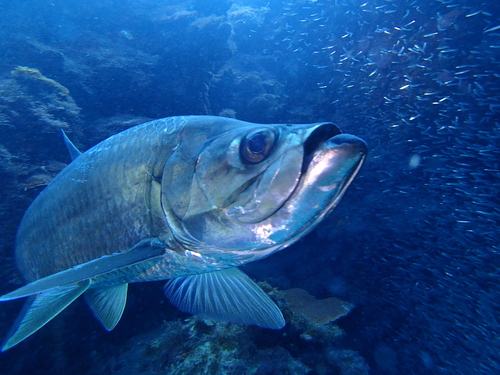
Escamas plateadas muy grandes, boca hacia arriba y último radio de la dorsal alargado como un filamento.
Very large silver scales, upturned mouth and a long filament on the last dorsal ray.
Cómo viveHow it lives
Puede tomar aire de la superficie. Se agrupa de día en cuevas y canales.
Can gulp air at the surface. Groups up in caves and channels by day.
De dónde viene el nombreWhere the name comes from
Megalops. "Ojo grande" en griego.Greek for "big eye".
FichaData sheet
- Tamaño máximoMaximum size
- 2,5 m (longitud total)2.5 m (total length)
- AlimentaciónDiet
- Come pecesEats fish
- ActividadActivity
- De nocheBy night
- Dónde viveHabitat
- Cuevas y salientes, aguas abiertas, desembocadurasCaves and ledges, open water, river mouths
- En esta costaOn this coast
- OcasionalOccasional
- Estado globalGlobal status
- VU VulnerableVulnerable (Lista Roja UICN)(IUCN Red List)
Registros en esta costaRecords on this coast
observaciones verificadas en iNaturalist entre Cahuita y Punta Mona. Puesto 155 de 315.
verified iNaturalist observations between Cahuita and Punta Mona. Rank 155 of 315.
Mide cuánto se fotografía, no cuántos hay: lo grande, colorido y somero se registra más.
This measures how often it is photographed, not how many there are: big, colourful, shallow things get recorded more.