Loro verdeStoplight parrotfish
Stoplight parrotfishLoro verde
Sparisoma viride (Bonnaterre, 1788)
Scaridae · LorosParrotfish
A veces muerde coral vivo y deja marcas blancas que se ven en las colonias.
It sometimes bites live coral, leaving white scars you can spot on the colonies.
Cómo reconocerloHow to recognise it
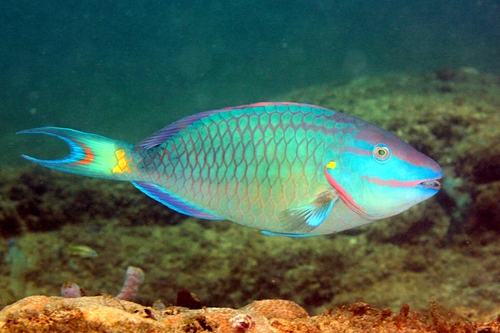
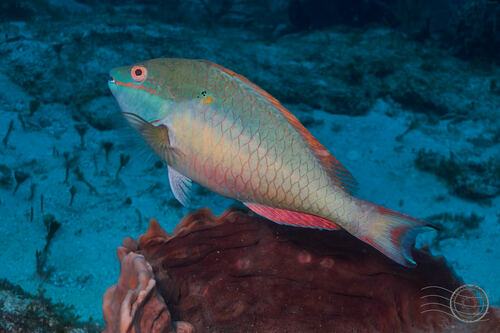
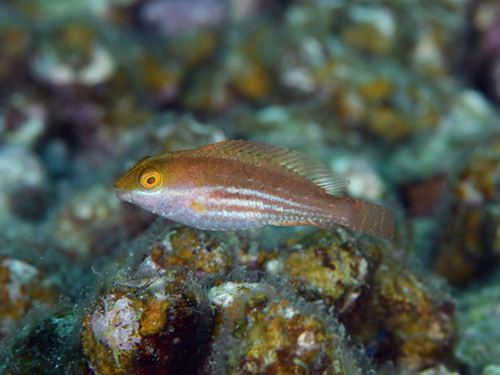
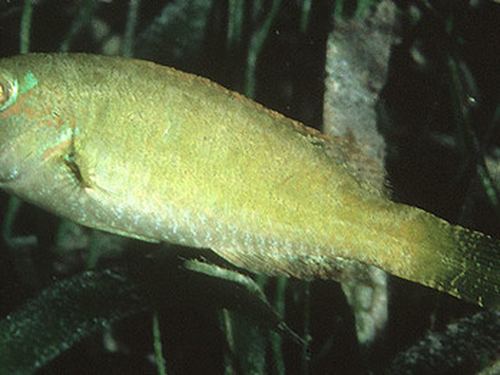
Macho terminal verde con mancha amarilla en la base de la cola y otra en el opérculo. Hembras e inicial: cabeza y dorso moteados, vientre rojo.
Terminal males green with a yellow spot at the tail base and on the gill cover. Females and initial phase: mottled head and back, red belly.
Fíjate enLook for: Mancha amarilla junto a la agalla (macho)Yellow spot by the gill cover (male)
| InicialInitial | Escamas oscuras y vientre rojoDark scales and a red belly |
|---|---|
| Macho finalTerminal male | Verde con mancha amarillaGreen with a yellow spot |
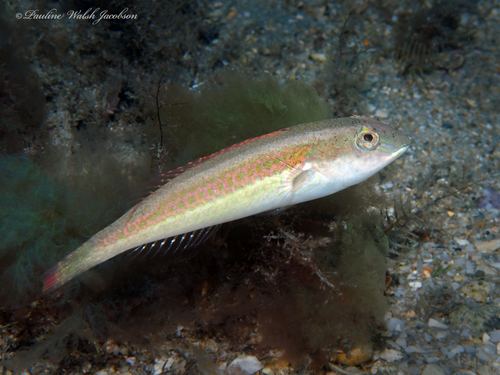
Se confunde conOften confused with
Cómo viveHow it lives
Raspa algas del coral muerto con su "pico" y produce gran parte de la arena blanca del arrecife. Cambia de sexo de hembra a macho.
Scrapes algae off dead coral with its beak and produces much of the reef’s white sand. Changes sex from female to male.
De dónde viene el nombreWhere the name comes from
Sparisoma. "Cuerpo de Sparus", como un sargo."Body like Sparus", like a sea bream.
FichaData sheet
- Tamaño máximoMaximum size
- 64 cm (longitud total)64 cm (total length)
- AlimentaciónDiet
- HerbívoroHerbivore
- ActividadActivity
- De díaBy day
- Dónde viveHabitat
- ArrecifeReef
- En esta costaOn this coast
- ComúnCommon
Registros en esta costaRecords on this coast
observaciones verificadas en iNaturalist entre Cahuita y Punta Mona. Puesto 56 de 315.
verified iNaturalist observations between Cahuita and Punta Mona. Rank 56 of 315.
Mide cuánto se fotografía, no cuántos hay: lo grande, colorido y somero se registra más.
This measures how often it is photographed, not how many there are: big, colourful, shallow things get recorded more.
FuentesSources
- Phillips & Pérez-Cruet 1984. A comparative survey of reef fishes in Caribbean and Pacific Costa Rica. Rev. Biol. Trop. 32(1). AbrirOpen