Caballito de marLongsnout seahorse
Longsnout seahorseCaballito de mar
Hippocampus reidi
Syngnathidae · Cofres, globos y lijasBoxfish, puffers & co.
Nada con su pequeña aleta dorsal, que bate decenas de veces por segundo.
It swims with its small dorsal fin, beating it dozens of times a second.
Cómo reconocerloHow to recognise it
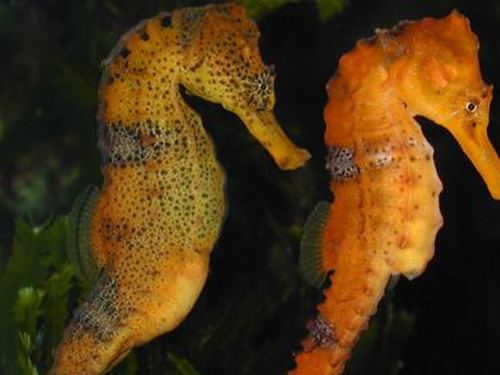
Cuerpo vertical con cabeza de caballo; color variable (amarillo, naranja, pardo) con puntos.
Upright body with a horse-like head; variable colour (yellow, orange, brown) with spots.
OjoCareful: No lo toques ni lo muevas.Do not touch or move it.
Cómo viveHow it lives
El macho incuba los huevos en una bolsa. Se ancla con la cola a esponjas o pasto. Casi amenazado.
The male broods the eggs in a pouch. Anchors itself by the tail to sponges or grass. Near threatened.
De dónde viene el nombreWhere the name comes from
Hippocampus. "Caballo" y "monstruo marino" en griego.Greek for "horse" and "sea monster".
FichaData sheet
- Tamaño máximoMaximum size
- 18 cm (longitud total)18 cm (total length)
- AlimentaciónDiet
- PlanctívoroPlankton feeder
- ActividadActivity
- De díaBy day
- Dónde viveHabitat
- Pastos marinos, manglar, arrecifeSeagrass, mangrove, reef
- En esta costaOn this coast
- RaraRare
- Estado globalGlobal status
- NT Casi amenazadaNear threatened (Lista Roja UICN)(IUCN Red List)
- RegistroRecord
- Registrado en la región (Limón a Bocas del Toro)Recorded in the region (Limón to Bocas del Toro)
Registros en esta costaRecords on this coast
observaciones verificadas en iNaturalist entre Cahuita y Punta Mona. Puesto 281 de 315.
verified iNaturalist observations between Cahuita and Punta Mona. Rank 281 of 315.
Mide cuánto se fotografía, no cuántos hay: lo grande, colorido y somero se registra más.
This measures how often it is photographed, not how many there are: big, colourful, shallow things get recorded more.
FuentesSources
- iNaturalist (región). Observaciones entre Limón (CR) y Bocas del Toro (Panamá), consulta nov. 2026. AbrirOpen