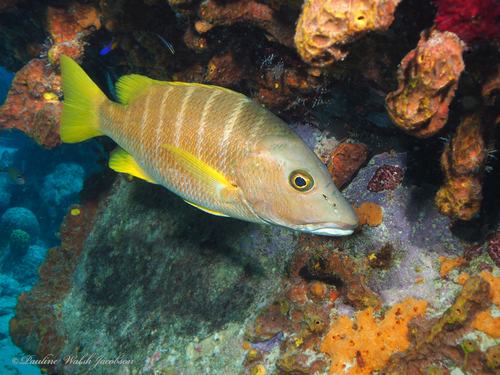
Pargo amarilloSchoolmaster
SchoolmasterPargo amarillo
Lutjanus apodus (Walbaum, 1792)
Lutjanidae · Pargos, roncos y chopasSnappers, grunts & chubs
Puede quedarse en el mismo rincón del arrecife durante meses.
It can stay at the same corner of the reef for months.
Cómo reconocerloHow to recognise it
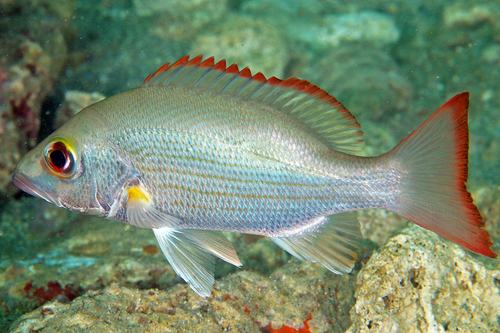
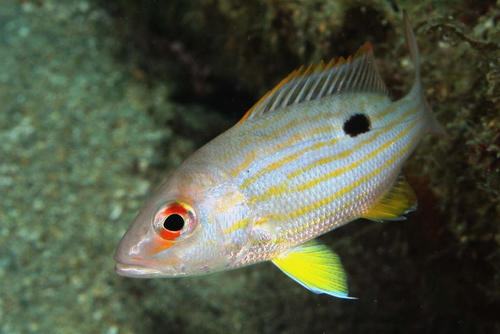
Pargo de aletas amarillas, cuerpo plateado-oliváceo con barras pálidas tenues y una línea azul bajo el ojo.
Yellow-finned snapper, silvery olive with faint pale bars and a blue line below the eye.
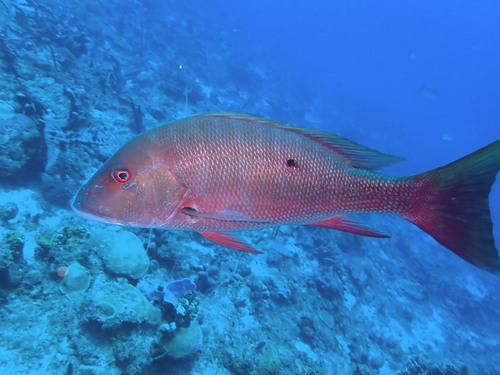
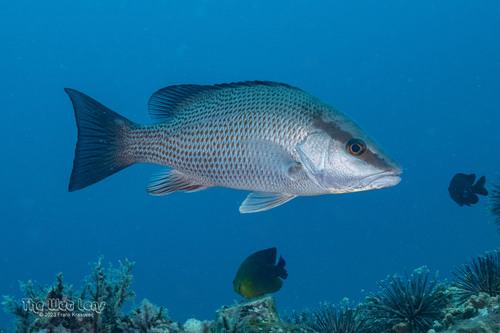
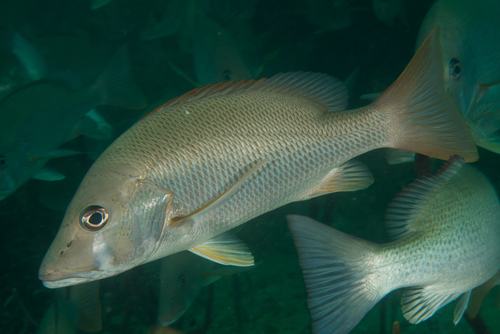
Fíjate enLook for: Aletas amarillas; barras pálidasYellow fins; pale bars
Se confunde conOften confused with
Cómo viveHow it lives
Se agrupa de día alrededor de cabezas de coral y raíces; caza de noche.
Gathers around coral heads and roots by day; hunts at night.
De dónde viene el nombreWhere the name comes from
Lutjanus. Del malayo "ikan lutjang", nombre de un pargo.From Malay "ikan lutjang", a snapper name.
FichaData sheet
- Tamaño máximoMaximum size
- 67 cm (longitud total)67 cm (total length)
- AlimentaciónDiet
- Come pecesEats fish
- ActividadActivity
- De nocheBy night
- Dónde viveHabitat
- Arrecife, manglar, cuevas y salientesReef, mangrove, caves and ledges
- En esta costaOn this coast
- FrecuenteFrequent
Registros en esta costaRecords on this coast
observaciones verificadas en iNaturalist entre Cahuita y Punta Mona. Puesto 5 de 315.
verified iNaturalist observations between Cahuita and Punta Mona. Rank 5 of 315.
Mide cuánto se fotografía, no cuántos hay: lo grande, colorido y somero se registra más.
This measures how often it is photographed, not how many there are: big, colourful, shallow things get recorded more.
FuentesSources
- Phillips & Pérez-Cruet 1984. A comparative survey of reef fishes in Caribbean and Pacific Costa Rica. Rev. Biol. Trop. 32(1). AbrirOpen