Pez erizoPorcupinefish
PorcupinefishPez erizo
Diodon hystrix Linnaeus, 1758
Diodontidae · Cofres, globos y lijasBoxfish, puffers & co.
Sus dientes están fusionados en un pico que rompe erizos y caracoles.
Its teeth are fused into a beak that cracks urchins and snails.
Cómo reconocerloHow to recognise it
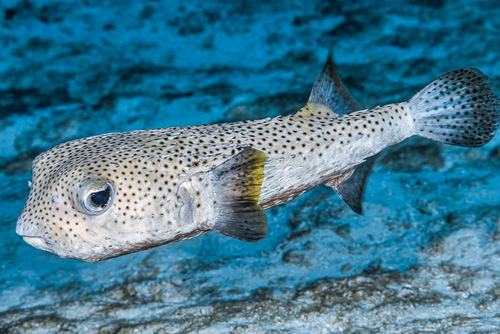
Ojos grandes, cuerpo marrón claro con pequeños puntos negros por todo el cuerpo y las aletas. Espinas largas plegadas.
Large eyes, light brown body with small black spots all over the body and fins. Long spines lying flat.
Fíjate enLook for: Espinas largas; muchos puntos pequeñosLong spines; many small dots
Se confunde conOften confused with
Cómo viveHow it lives
Se infla tragando agua cuando se siente amenazado; hacerlo le causa estrés.
Inflates by swallowing water when threatened; doing so stresses the fish.
De dónde viene el nombreWhere the name comes from
Diodon. "Dos dientes" en griego: sus dientes forman un pico de dos piezas.Greek for "two teeth": its teeth form a two-part beak.
FichaData sheet
- Tamaño máximoMaximum size
- 91 cm (longitud total)91 cm (total length)
- AlimentaciónDiet
- Come invertebradosEats invertebrates
- ActividadActivity
- De nocheBy night
- Dónde viveHabitat
- Arrecife, cuevas y salientesReef, caves and ledges
- En esta costaOn this coast
- OcasionalOccasional
Registros en esta costaRecords on this coast
observaciones verificadas en iNaturalist entre Cahuita y Punta Mona. Puesto 60 de 315.
verified iNaturalist observations between Cahuita and Punta Mona. Rank 60 of 315.
Mide cuánto se fotografía, no cuántos hay: lo grande, colorido y somero se registra más.
This measures how often it is photographed, not how many there are: big, colourful, shallow things get recorded more.
FuentesSources
- Phillips & Pérez-Cruet 1984. A comparative survey of reef fishes in Caribbean and Pacific Costa Rica. Rev. Biol. Trop. 32(1). AbrirOpen