AlónFlying gurnard
Flying gurnardAlón
Dactylopterus volitans (Linnaeus, 1758)
Dactylopteridae
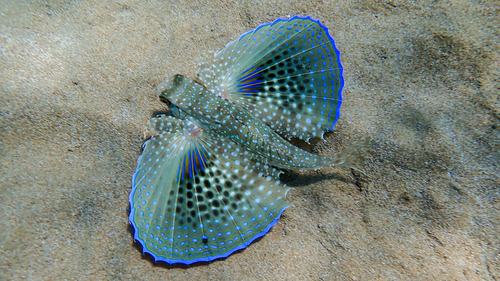
No vuela: abre sus enormes pectorales como alas para asustar y "camina" con aletas modificadas.
It does not fly: it spreads huge wing-like pectorals to startle predators and "walks" on modified fins.
Cómo reconocerloHow to recognise it
Cabeza blindada; aletas pectorales enormes con borde azul brillante que despliega al alarmarse.
Armored head; huge pectoral fins with bright blue edges, spread when alarmed.
Cómo viveHow it lives
"Camina" sobre la arena con radios libres de las aletas pélvicas.
"Walks" on the sand using free rays of its pelvic fins.
De dónde viene el nombreWhere the name comes from
Dactylopterus. "Dedos con alas" en griego.Greek for "finger wing".
FichaData sheet
- Tamaño máximoMaximum size
- 50 cm (longitud total)50 cm (total length)
- AlimentaciónDiet
- Come invertebradosEats invertebrates
- ActividadActivity
- De díaBy day
- Dónde viveHabitat
- Arena, pastos marinosSand, seagrass
- En esta costaOn this coast
- OcasionalOccasional
Registros en esta costaRecords on this coast
observaciones verificadas en iNaturalist entre Cahuita y Punta Mona. Puesto 118 de 315.
verified iNaturalist observations between Cahuita and Punta Mona. Rank 118 of 315.
Mide cuánto se fotografía, no cuántos hay: lo grande, colorido y somero se registra más.
This measures how often it is photographed, not how many there are: big, colourful, shallow things get recorded more.