Pez ángel francésFrench angelfish
French angelfishPez ángel francés
Pomacanthus paru (Bloch, 1787)
Pomacanthidae · Damiselas, ángeles y cirujanosDamsels, angels & surgeons
Los juveniles limpian parásitos de otros peces.
Juveniles clean parasites off other fish.
Cómo reconocerloHow to recognise it
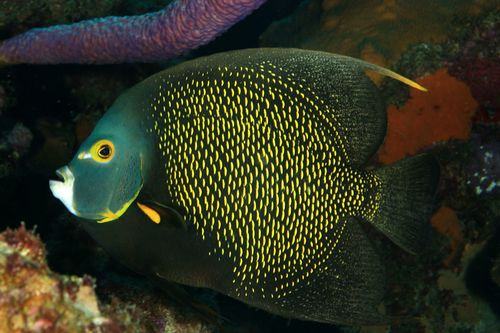
Negro con escamas de borde amarillo, anillo amarillo alrededor del ojo y barbilla blanquecina. Juvenil negro con bandas amarillas curvas.
Black with yellow-rimmed scales, a yellow ring around the eye and a whitish chin. Juveniles black with curved yellow bands.
Fíjate enLook for: Negro con escamas bordeadas de amarilloBlack with yellow-rimmed scales
| JuvenilJuvenile | Negro con barras amarillas curvasBlack with curved yellow bars |
|---|---|
| AdultoAdult | Negro con escamas bordeadas de amarilloBlack with yellow-rimmed scales |
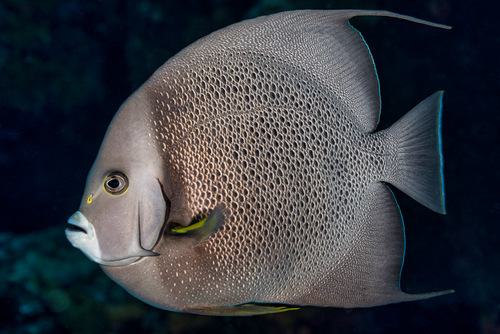
Se confunde conOften confused with
Cómo viveHow it lives
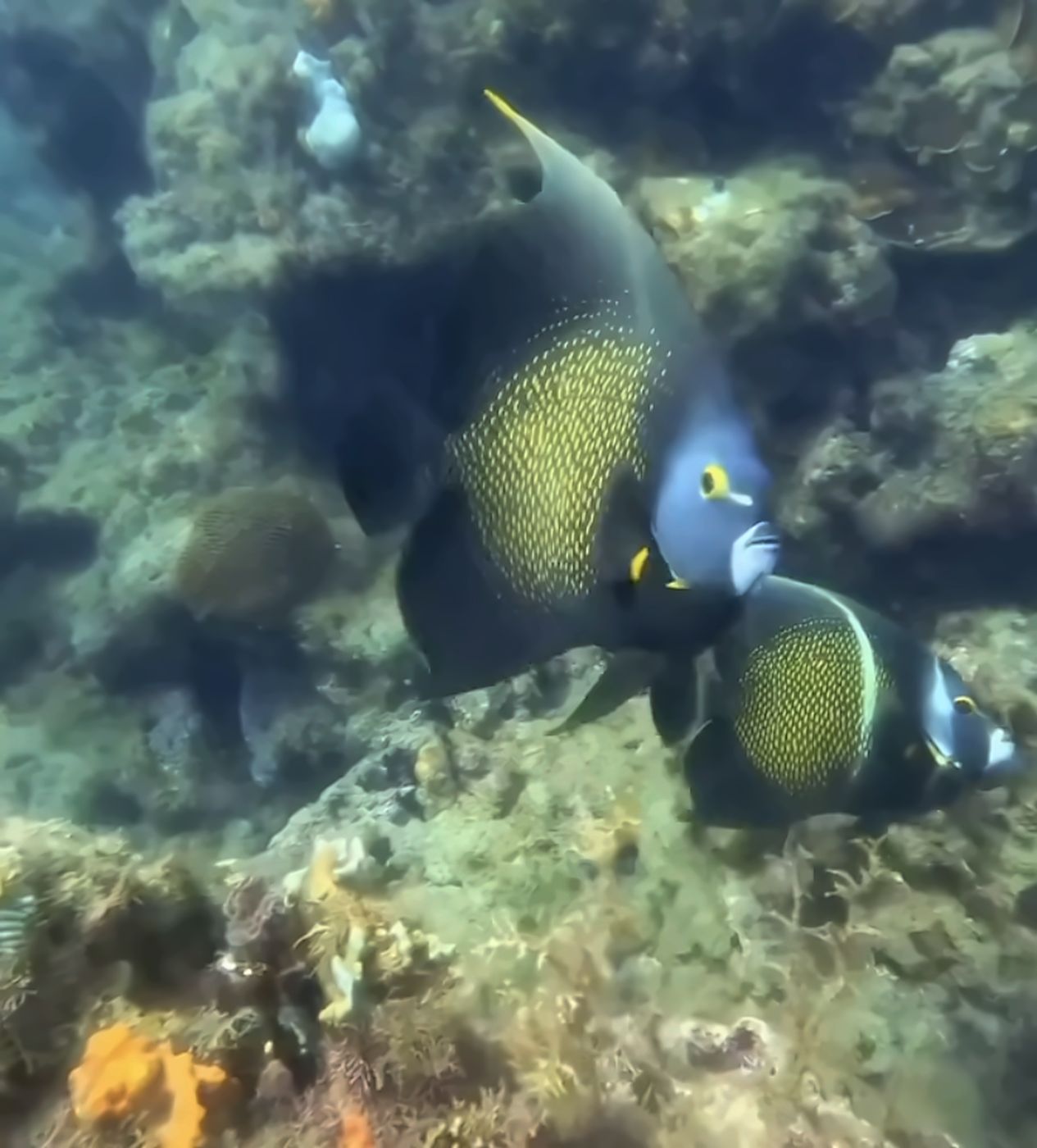
Casi siempre en pareja estable. Se alimenta sobre todo de esponjas; los juveniles limpian parásitos de otros peces.
Almost always in stable pairs. Feeds mainly on sponges; juveniles clean parasites off other fish.
De dónde viene el nombreWhere the name comes from
Pomacanthus. "Opérculo con espina" en griego.Greek for "spiny gill cover".
FichaData sheet
- Tamaño máximoMaximum size
- 41 cm (longitud total)41 cm (total length)
- AlimentaciónDiet
- Come esponjasEats sponges
- ActividadActivity
- De díaBy day
- Dónde viveHabitat
- Arrecife, cuevas y salientesReef, caves and ledges
- En esta costaOn this coast
- FrecuenteFrequent
Registros en esta costaRecords on this coast
observaciones verificadas en iNaturalist entre Cahuita y Punta Mona. Puesto 47 de 315.
verified iNaturalist observations between Cahuita and Punta Mona. Rank 47 of 315.
Mide cuánto se fotografía, no cuántos hay: lo grande, colorido y somero se registra más.
This measures how often it is photographed, not how many there are: big, colourful, shallow things get recorded more.
FuentesSources
- Phillips & Pérez-Cruet 1984. A comparative survey of reef fishes in Caribbean and Pacific Costa Rica. Rev. Biol. Trop. 32(1). AbrirOpen