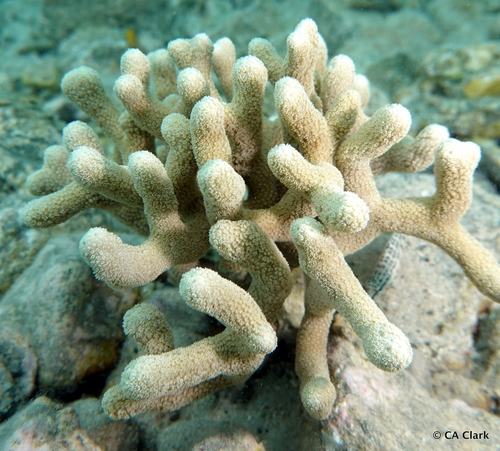
Coral dedoFinger coral
Finger coralCoral dedo
Porites porites
Poritidae
Cómo reconocerloHow to recognise it
Ramas gruesas con puntas romas; pólipos extendidos le dan aspecto peludo.
Thick branches with blunt tips; extended polyps give a fuzzy look.
Cómo viveHow it lives
En esta costaOn this coast
Tercera especie más abundante en Cahuita (13 %). Domina el frente del arrecife entre 1 y 2 m y también crece en la cresta.
Third most abundant species at Cahuita (13 %). Dominates the reef front between 1 and 2 m and also grows on the crest.
FichaData sheet
- Tamaño máximoMaximum size
- 1 m (tamaño de colonia)1 m (colony size)
- AlimentaciónDiet
- Fotosintético (zooxantelas o algas)Photosynthetic (zooxanthellae or algae)
- ActividadActivity
- De día y de nocheDay and night
- Dónde viveHabitat
- Arrecife, pastos marinosReef, seagrass
- En esta costaOn this coast
- ComúnCommon
Registros en esta costaRecords on this coast
observaciones verificadas en iNaturalist entre Cahuita y Punta Mona. Puesto 66 de 315.
verified iNaturalist observations between Cahuita and Punta Mona. Rank 66 of 315.
Mide cuánto se fotografía, no cuántos hay: lo grande, colorido y somero se registra más.
This measures how often it is photographed, not how many there are: big, colourful, shallow things get recorded more.
FuentesSources
- Cortés 1992. Los arrecifes coralinos del Refugio Nacional de Vida Silvestre Gandoca-Manzanillo, Limón, Costa Rica. Rev. Biol. Trop. 40(3). AbrirOpen
- Cortés & Risk 1984. El arrecife coralino del Parque Nacional Cahuita, Costa Rica. Rev. Biol. Trop. 32(1): 109–121.