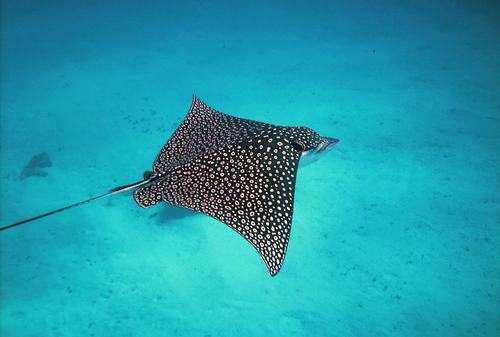
Raya águilaSpotted eagle ray
Spotted eagle rayRaya águila
Aetobatus narinari (Euphrasen, 1790)
Aetobatidae · RayasRays
Salta fuera del agua y puede volar varios metros en el aire.
It leaps out of the water and can glide several metres through the air.
Cómo reconocerloHow to recognise it
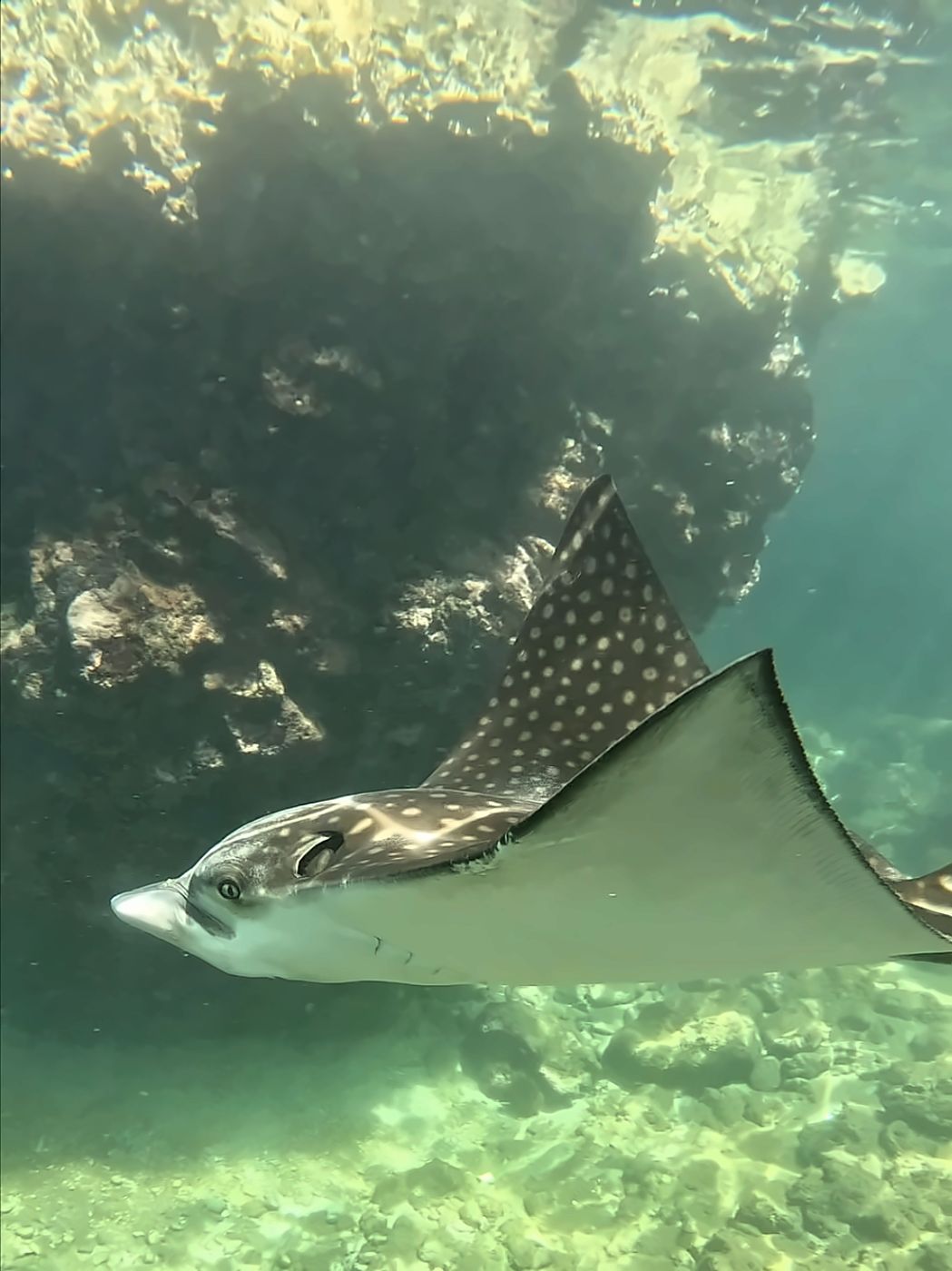
Dorso oscuro con numerosos puntos blancos, vientre blanco y hocico en forma de pico de pato. Cola muy larga con espinas.
Dark back covered in white spots, white belly and a duck-bill snout. Very long tail with spines.
Fíjate enLook for: Puntos blancos y cola largaWhite spots and long tail
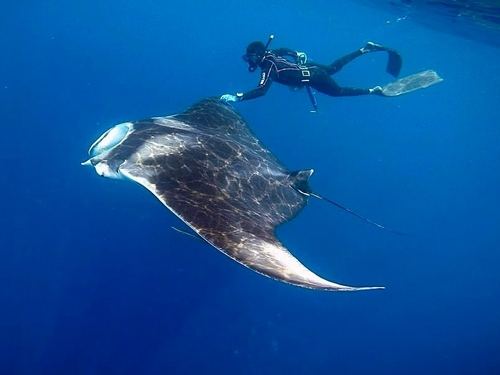
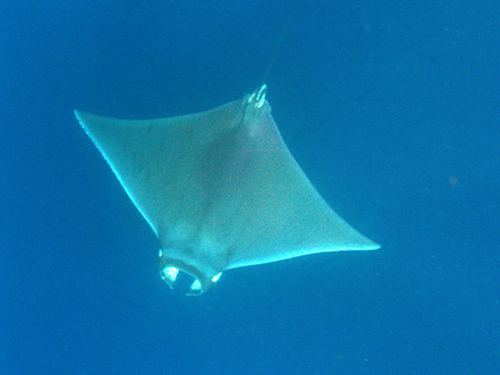
Se confunde conOften confused with
Cómo viveHow it lives
Excava la arena con el hocico en busca de moluscos que tritura con placas dentales.
Digs in the sand with its snout for molluscs, which it crushes with dental plates.
De dónde viene el nombreWhere the name comes from
Aetobatus. "Raya águila" en griego.Greek for "eagle ray".
FichaData sheet
- Tamaño máximoMaximum size
- 3,3 m (ancho del disco)3.3 m (disc width)
- AlimentaciónDiet
- Come invertebradosEats invertebrates
- ActividadActivity
- De díaBy day
- Dónde viveHabitat
- Arena, arrecife, aguas abiertasSand, reef, open water
- En esta costaOn this coast
- RaraRare
- Estado globalGlobal status
- EN En peligroEndangered (Lista Roja UICN)(IUCN Red List)
Registros en esta costaRecords on this coast
observaciones verificadas en iNaturalist entre Cahuita y Punta Mona. Puesto 194 de 315.
verified iNaturalist observations between Cahuita and Punta Mona. Rank 194 of 315.
Mide cuánto se fotografía, no cuántos hay: lo grande, colorido y somero se registra más.
This measures how often it is photographed, not how many there are: big, colourful, shallow things get recorded more.