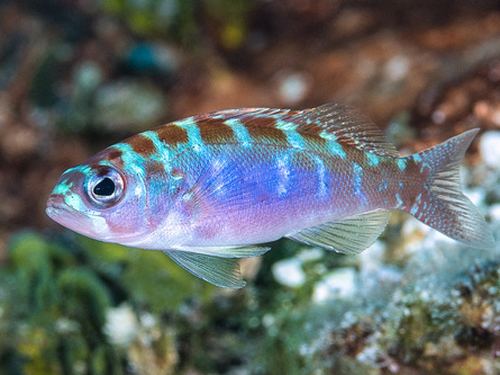
Serrano tizaChalk bass
Chalk bassSerrano tiza
Serranus tortugarum
Serranidae · Meros y serranosGroupers & basses
Vive en grupos donde todos pueden ser macho y hembra.
It lives in groups where everyone can be both male and female.
Cómo reconocerloHow to recognise it
Pequeño, azul lavanda con barras naranjas tenues.
Small, lavender blue with faint orange bars.
Fíjate enLook for: Lavanda con barras naranjasLavender with orange bars
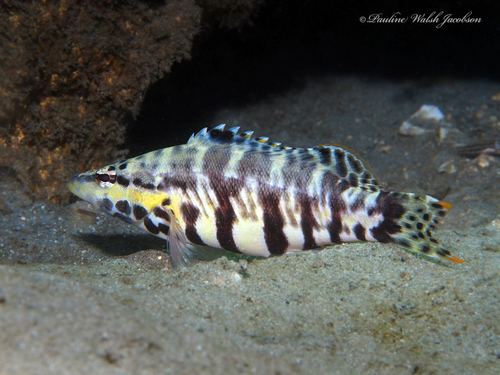
Se confunde conOften confused with
Cómo viveHow it lives
Vive en grupos cerca de cascajo en arrecifes profundos.
Lives in groups near rubble on deeper reefs.
De dónde viene el nombreWhere the name comes from
Serranus. "Sierra" en latín, por el borde del opérculo.Latin for "saw", for its serrated gill cover.
FichaData sheet
- Tamaño máximoMaximum size
- 8 cm (longitud total)8 cm (total length)
- AlimentaciónDiet
- PlanctívoroPlankton feeder
- ActividadActivity
- De díaBy day
- Dónde viveHabitat
- Arrecife, cascajoReef, rubble
- En esta costaOn this coast
- RaraRare
- RegistroRecord
- Registrado en la región (Limón a Bocas del Toro)Recorded in the region (Limón to Bocas del Toro)
Registros en esta costaRecords on this coast
observaciones verificadas en iNaturalist entre Cahuita y Punta Mona. Puesto 267 de 315.
verified iNaturalist observations between Cahuita and Punta Mona. Rank 267 of 315.
Mide cuánto se fotografía, no cuántos hay: lo grande, colorido y somero se registra más.
This measures how often it is photographed, not how many there are: big, colourful, shallow things get recorded more.
FuentesSources
- iNaturalist (región). Observaciones entre Limón (CR) y Bocas del Toro (Panamá), consulta nov. 2026. AbrirOpen