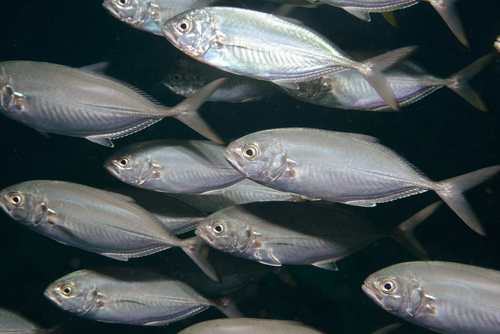
CojinúaBlue runner
Blue runnerCojinúa
Caranx crysos
Carangidae · Jureles y mar abiertoJacks & open water
Los juveniles se esconden bajo el sargazo y otros objetos que flotan a la deriva.
Juveniles hide under sargassum and other floating debris.
Cómo reconocerloHow to recognise it
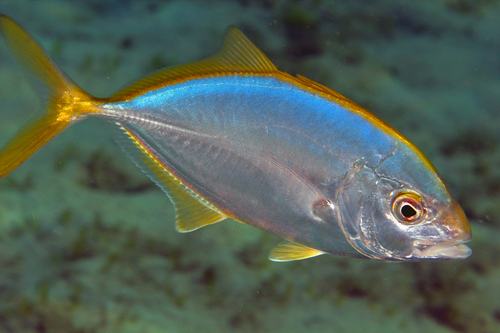
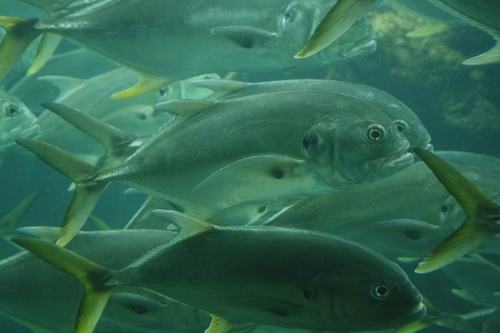
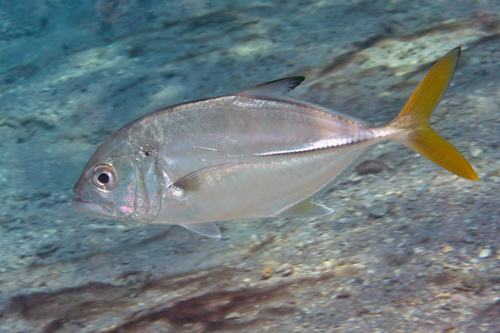
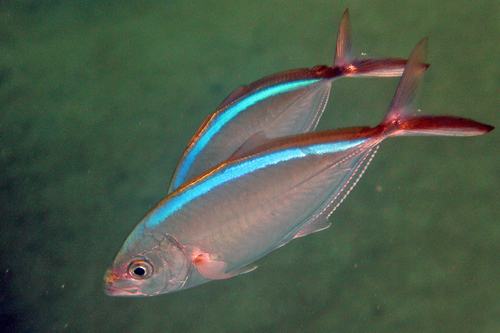
Jurel verde-azulado a plateado con una mancha negra en el opérculo.
Bluish-green to silver jack with a black spot on the gill cover.
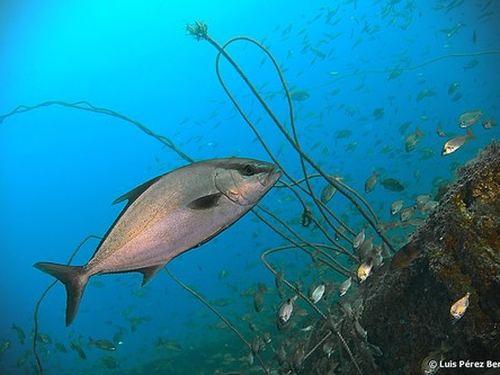
Fíjate enLook for: Mancha negra en la agalla; cuerpo verde azuladoBlack spot on the gill cover; blue-green body
Se confunde conOften confused with
Cómo viveHow it lives
De dónde viene el nombreWhere the name comes from
Caranx. Del francés "carangue", nombre de estos peces en las Antillas.From French "carangue", the West Indian name for these fish.
FichaData sheet
- Tamaño máximoMaximum size
- 70 cm (longitud total)70 cm (total length)
- AlimentaciónDiet
- Come pecesEats fish
- ActividadActivity
- De díaBy day
- Dónde viveHabitat
- Aguas abiertasOpen water
- En esta costaOn this coast
- RaraRare
Registros en esta costaRecords on this coast
observaciones verificadas en iNaturalist entre Cahuita y Punta Mona. Puesto 117 de 315.
verified iNaturalist observations between Cahuita and Punta Mona. Rank 117 of 315.
Mide cuánto se fotografía, no cuántos hay: lo grande, colorido y somero se registra más.
This measures how often it is photographed, not how many there are: big, colourful, shallow things get recorded more.
FuentesSources
- Phillips & Pérez-Cruet 1984. A comparative survey of reef fishes in Caribbean and Pacific Costa Rica. Rev. Biol. Trop. 32(1). AbrirOpen