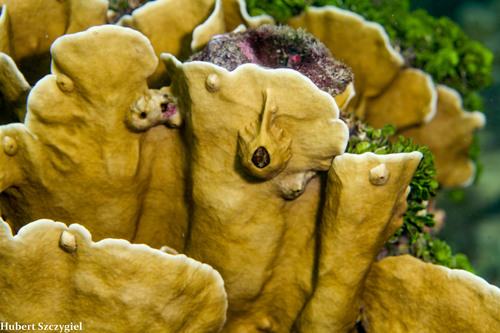
Coral de fuego laminarBlade fire coral
Blade fire coralCoral de fuego laminar
Millepora complanata
Milleporidae
Cómo reconocerloHow to recognise it
Láminas verticales color mostaza con bordes blancos, en zonas con oleaje.
Upright mustard-colored blades with white edges, in wave-washed zones.
OjoCareful: Pica al contacto.Stings on contact.
Cómo viveHow it lives
En esta costaOn this coast
Muy abundante en Cahuita. Comparte la cresta con el coral cuerno de alce y también crece en la laguna y la planicie.
Very abundant at Cahuita. Shares the crest with elkhorn coral and also grows in the lagoon and reef flat.
FichaData sheet
- Tamaño máximoMaximum size
- 50 cm (tamaño de colonia)50 cm (colony size)
- AlimentaciónDiet
- Fotosintético (zooxantelas o algas)Photosynthetic (zooxanthellae or algae)
- ActividadActivity
- De día y de nocheDay and night
- Dónde viveHabitat
- Cresta arrecifalReef crest
- En esta costaOn this coast
- ComúnCommon
- Estado globalGlobal status
- CR En peligro críticoCritically endangered (Lista Roja UICN)(IUCN Red List)
Registros en esta costaRecords on this coast
observaciones verificadas en iNaturalist entre Cahuita y Punta Mona. Puesto 29 de 315.
verified iNaturalist observations between Cahuita and Punta Mona. Rank 29 of 315.
Mide cuánto se fotografía, no cuántos hay: lo grande, colorido y somero se registra más.
This measures how often it is photographed, not how many there are: big, colourful, shallow things get recorded more.
FuentesSources
- Cortés 1992. Los arrecifes coralinos del Refugio Nacional de Vida Silvestre Gandoca-Manzanillo, Limón, Costa Rica. Rev. Biol. Trop. 40(3). AbrirOpen
- Cortés & Risk 1984. El arrecife coralino del Parque Nacional Cahuita, Costa Rica. Rev. Biol. Trop. 32(1): 109–121.